



Call Us
+86-18332577666
Email Us
xiaomengxuan123@126.com

How Can a Water Resistant Corrugated Pallet Protect Your Cargo and Reduce Export Shipping Costs
Article Summary: Moisture exposure can weaken conventional paper packaging, damage palletized goods, and increase costs during international transportation. A Water Resistant Corrugated Pallet from ZHONGYI is designed to address these challenges through moisture-resistant surface treatment, lightweight corrugated construction, and a structure tailored to specific cargo requirements. This guide explains how water-resistant paper pallets work, where they offer the greatest value, how to evaluate load capacity, and what buyers should consider when sourcing customized export packaging.
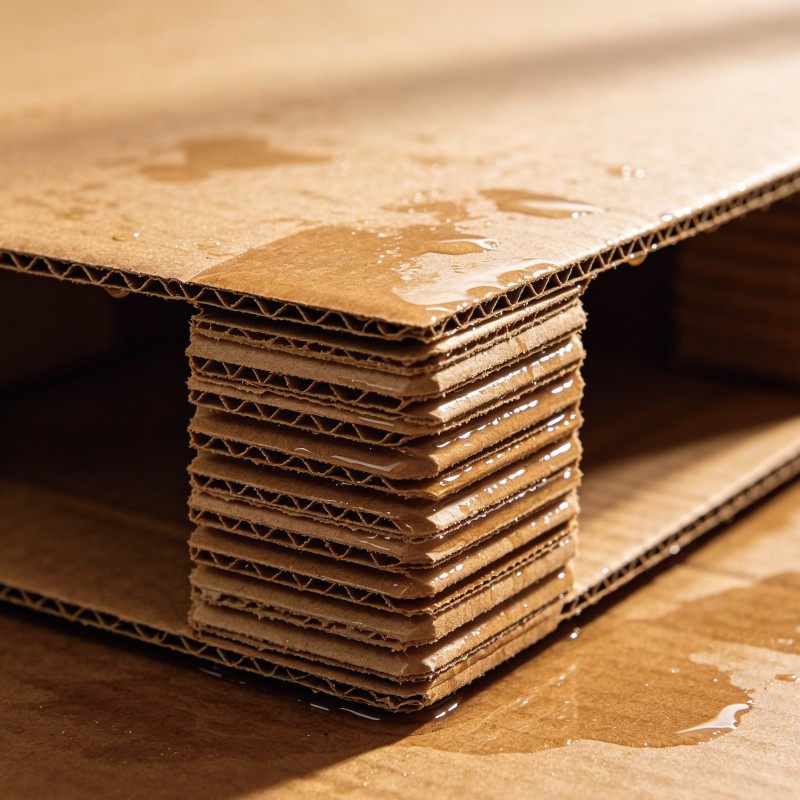
Table of Contents
- What Is a Water Resistant Corrugated Pallet?
- Why Does Moisture Protection Matter in Logistics?
- Key Benefits for Exporters and Manufacturers
- How Does Water-Resistant Technology Work?
- Where Are Water Resistant Corrugated Pallets Used?
- Corrugated Pallets vs. Wooden and Plastic Pallets
- How to Choose the Right Pallet
- Quality Control and Performance Verification
- Frequently Asked Questions
- Conclusion
What Is a Water Resistant Corrugated Pallet?
A water resistant corrugated pallet is a paper-based load-bearing platform manufactured from corrugated cardboard and enhanced with moisture-resistant treatment. Unlike a conventional untreated paper pallet, it incorporates protective measures designed to reduce moisture absorption and help maintain structural integrity in humid logistics environments.
ZHONGYI offers water-resistant corrugated pallet solutions intended for export transportation, container shipping, and warehouse operations where humidity can affect packaging performance. Depending on the application, the construction can incorporate high-strength corrugated layers, reinforced support blocks, and protective film lamination.
The pallet generally consists of two main components:
- Top deck: Provides a stable surface for cartons, packaged components, and other unitized cargo.
- Corrugated support blocks: Distribute the load and create entry spaces for compatible forklifts or pallet-handling equipment.
Depending on cargo weight and handling requirements, buyers can discuss different board constructions, dimensions, entry configurations, and moisture-resistant treatments. For related material options, explore ZHONGYI's customized corrugated pallets.
Why Does Moisture Protection Matter in Logistics?
Moisture is a frequently overlooked factor in packaging performance. During ocean freight, container storage, cross-border transportation, and seasonal warehouse operations, paper packaging may encounter high relative humidity, condensation, or occasional splashes.
When untreated corrugated material absorbs excessive moisture, its stiffness and compression resistance can decrease. Support blocks may deform under pressure, adhesive joints may weaken, and the palletized load may become less stable.
These problems can create several commercial risks:
- Cartons shifting or collapsing during handling and transportation.
- Increased product damage and repacking expenses.
- Delays caused by unstable loads or damaged packaging.
- Higher inspection, replacement, and waste-management costs.
- Reduced reliability when cargo moves through humid ports or warehouses.
A properly specified water-resistant pallet helps reduce moisture-related deterioration by slowing water penetration into vulnerable surfaces. However, water resistance does not mean complete waterproofing. Prolonged exposure to standing water, direct rain, or saturated conditions can still compromise paper-based products.
For export shipments, buyers should therefore evaluate the pallet together with stretch wrapping, container conditions, moisture barriers, and the overall packaging design.
What Are the Key Benefits of Water Resistant Corrugated Pallets?
1. Better Resistance to Humid Conditions
Moisture-resistant coatings or film lamination help reduce direct contact between the paper surface and environmental moisture. This can be valuable when cargo passes through coastal warehouses, humid distribution centers, or international shipping routes with changing climatic conditions.
2. Lower Tare Weight
Corrugated pallets are generally much lighter than comparable wooden alternatives. A lower pallet weight can reduce total shipment mass, particularly for air freight and weight-sensitive logistics operations. Actual savings depend on pallet dimensions, cargo weight, freight pricing rules, and the selected construction.
3. Fumigation-Free Export Handling
Paper-based pallets can avoid the wood-treatment requirements that apply to regulated solid-wood packaging under applicable international phytosanitary rules. This can simplify export preparation, although buyers should confirm destination-specific requirements and any additional packaging restrictions.
4. Reduced Risk of Splinters and Nail Damage
Unlike conventional wooden pallets, all-paper corrugated designs do not rely on exposed nails or wooden boards. This can help protect finished surfaces, delicate cartons, coated metal components, and other products vulnerable to scratches or punctures.
5. Recyclability and Packaging Efficiency
Paper-based pallets can support recycling-oriented packaging programs when their coatings, adhesives, and local recycling infrastructure permit. Buyers pursuing sustainability objectives should verify the recyclability of the complete treated product rather than assuming every laminated design is accepted by standard paper-recycling streams.
How Does Water-Resistant Technology Work?
The performance of a water resistant corrugated pallet depends on both its structural design and its surface protection. Moisture resistance cannot compensate for inadequate load-bearing construction, so both factors should be assessed together.
Protective Surface Treatment
Water-resistant sizing, specialized coatings, or film lamination can help limit the rate at which moisture penetrates the exposed paper surface. Film lamination is particularly relevant when shipments face elevated humidity or occasional surface moisture.
Multi-Layer Corrugated Construction
Multiple paper layers and corrugated flutes create a lightweight structure with useful stiffness and compression resistance. Double-wall or triple-wall constructions may be considered for different loading requirements, subject to product design and performance testing.
Reinforced Support and Bonding
The support blocks beneath the deck play an important role in load distribution. Their geometry, bonding quality, and positioning influence how the pallet responds to lifting, stacking, and movement.
For suitable applications, buyers can also consider complementary protection measures:
- Moisture-resistant liners beneath the cargo.
- Stretch film to protect the palletized load.
- Paper edge protectors to limit corner damage.
- Strapping to improve unit-load stability.
- Desiccants or container moisture-control solutions when justified by shipment conditions.
These measures should be selected according to cargo sensitivity, route conditions, and the required protection level.
Where Are Water Resistant Corrugated Pallets Used?
A water resistant corrugated pallet is particularly useful when lightweight handling and improved moisture protection are both important. Common applications include:
- International export shipping: Helps address humidity-related risks during container transportation and port handling.
- E-commerce fulfillment: Supports palletized shipments of cartons and packaged consumer products when the load and handling system are compatible.
- Electronics and electrical products: Provides a paper-based platform for boxed goods, with additional antistatic packaging specified separately when required.
- Lighting and home accessories: Helps reduce concerns about scratches from wooden splinters and packaging debris.
- Food and personal-care packaging: Can be used for appropriately packaged, non-direct-contact goods, subject to applicable hygiene and packaging requirements.
- Manufacturing and distribution: Supports the movement of finished products between production areas, warehouses, and shipping facilities.
For cargo with unusually high weight, long-term outdoor exposure, frequent reuse, or demanding high-rack storage requirements, a different pallet material or a specially engineered design may be more appropriate.
How Do Corrugated Pallets Compare with Wooden and Plastic Pallets?
The most suitable pallet depends on the balance between moisture exposure, load capacity, handling frequency, shipment weight, and total operating cost. The following table provides a practical comparison.
| Evaluation Factor | Water Resistant Corrugated Pallet | Wooden Pallet | Plastic Pallet |
|---|---|---|---|
| Empty pallet weight | Generally lightweight | Generally heavier | Varies by design and material |
| Moisture performance | Improved with suitable treatment; not fully waterproof | May absorb moisture and require suitable maintenance | Generally resistant to water absorption |
| Export preparation | Paper construction can avoid wood fumigation requirements | Solid-wood packaging may require ISPM 15 compliance | Generally avoids wood-treatment requirements |
| Reuse potential | Best assessed for the specified design and conditions; often used for one-way shipping | Often suitable for repeated use | Often suitable for repeated use |
| Surface protection | No exposed wood splinters or conventional pallet nails | Splinters, nails, or rough surfaces may require attention | Usually a smooth, consistent surface |
| End-of-life options | Potentially recyclable depending on coatings and local facilities | May be repaired, reused, or recycled | May be reusable or recyclable depending on polymer and facilities |
| Typical purchasing priority | Lightweight export packaging and moisture-conscious shipping | Durability, repairability, and established handling systems | Repeated cycles and wet operating environments |
For buyers comparing alternatives, the goal should be to calculate total delivered cost rather than focusing only on the purchase price. Consider freight savings, product damage risk, handling compatibility, pallet recovery, and disposal costs over the intended shipment cycle.
How Can Buyers Choose the Right Water Resistant Corrugated Pallet?
Before requesting a quotation, define the operating conditions and the actual performance requirements. This helps manufacturers recommend a structure that avoids both under-specification and unnecessary material costs.
1. Confirm Pallet Dimensions
Specify the required length, width, and overall height. Common formats may include 1200 × 1000 mm, 1200 × 800 mm, and 1100 × 1100 mm, but availability and suitability should be confirmed with the supplier and the destination handling system.
2. Calculate the Complete Load
Provide the gross cargo weight per pallet, including cartons and packaging materials. Distinguish static load, dynamic load, and rack load because these represent different operating conditions and should not be treated as interchangeable figures.
3. Select the Forklift Entry Configuration
- Two-way entry: Allows access from two opposing sides and may suit fixed handling routes.
- Four-way entry: Allows access from four sides and provides greater flexibility for compatible pallet-handling equipment.
Check fork dimensions, entry clearance, pallet-jack compatibility, and the direction in which the load will be moved.
4. Match the Moisture Protection to the Route
Identify whether the shipment will travel by air, road, rail, or sea. Explain the expected humidity, potential condensation, storage duration, and likelihood of direct water exposure. A supplier can then assess whether surface treatment, one-sided lamination, or double-sided lamination is appropriate.
5. Review Handling and Reuse Expectations
If the pallet will be used only for export, a lightweight disposable design may be cost-effective. If it must circulate repeatedly between facilities, test the proposed construction under actual handling conditions and compare it with reusable alternatives.
For additional options, review standard corrugated pallets and discuss customized dimensions or treatments with ZHONGYI.
What Quality Checks Should Buyers Request?
Water resistance is only one part of pallet performance. A reliable procurement process should verify structural strength, dimensional accuracy, bonding quality, and suitability for the intended transportation environment.
Consider requesting the following checks and documentation:
- Dimensional inspection: Confirm length, width, height, flatness, and forklift-entry clearance.
- Load testing: Evaluate static and dynamic performance under defined conditions and agreed acceptance criteria.
- Moisture-resistance evaluation: Test the treated surface using a method appropriate to the intended exposure.
- Bonding inspection: Check support-block adhesion, deck integrity, and the consistency of glued joints.
- Handling trials: Verify lifting stability and load distribution with the intended equipment.
- Packaging inspection: Check protective wrapping, edge protection, and shipment identification where specified.
Buyers should also request written confirmation of the tested load rating, test conditions, and any environmental limitations. A load rating without its supporting conditions may not reflect real-world performance.
ZHONGYI provides corrugated packaging solutions and can discuss product configurations based on cargo specifications and export requirements. For background on its wider packaging capabilities, visit the ZHONGYI official website.
Frequently Asked Questions
1. Is a water resistant corrugated pallet completely waterproof?
No. Water-resistant treatment helps reduce moisture penetration, but it does not make a paper pallet impervious to prolonged water exposure. Direct rain, standing water, and saturated storage conditions can still damage the structure. Additional wrapping and moisture-control measures may be necessary.
2. Can water resistant corrugated pallets be used for ocean freight?
Yes, they can be suitable for ocean freight when their load rating, protective treatment, and packaging configuration match the shipment conditions. Buyers should account for container condensation, route humidity, cargo weight, and storage duration before choosing a specification.
3. What load capacity can a corrugated pallet support?
Capacity depends on board construction, support-block design, dimensions, load distribution, and the handling environment. Static, dynamic, and rack-load ratings differ. Request documented performance data for the exact configuration instead of relying on a general industry figure.
4. Do corrugated pallets require ISPM 15 fumigation?
Paper-based pallets made without regulated solid-wood packaging components generally do not require ISPM 15 wood treatment. However, mixed-material packaging and destination-specific requirements should be checked before shipment.
5. Are water resistant corrugated pallets recyclable?
Many paper-based pallets can enter paper recycling streams, but coatings, film laminations, adhesives, and local recycling facilities affect acceptance. Ask the supplier for material details and confirm the requirements of the intended recycling provider.
6. Can ZHONGYI customize pallet dimensions and moisture protection?
Customization can be discussed according to the cargo dimensions, required load capacity, forklift-entry configuration, and moisture exposure. Buyers should provide these specifications when requesting a quotation so the manufacturer can evaluate a suitable design.
7. What information should I include in a quotation request?
Include pallet length and width, overall height, cargo weight, preferred entry type, shipping method, estimated order quantity, expected humidity, and required moisture treatment. Drawings, carton dimensions, and handling-equipment details can further improve specification accuracy.
Conclusion: Make Moisture Protection Part of Your Packaging Strategy
A well-specified water resistant corrugated pallet can help businesses balance moisture protection, shipment weight, cargo stability, and export packaging efficiency. Its effectiveness depends on the quality of the corrugated structure, the selected protective treatment, the actual load, and the conditions encountered throughout transportation. By reviewing these factors before purchasing, buyers can reduce avoidable packaging risks and make more informed decisions about their logistics operations.
ZHONGYI supports buyers seeking corrugated packaging solutions for export and industrial applications. If you are comparing pallet specifications, planning a shipment, or looking for a customized moisture-resistant design, contact us to discuss your cargo requirements, dimensions, load capacity, and expected shipping conditions. Our team can help you evaluate suitable options for a more reliable and cost-conscious packaging solution.
Previous:No News
Send Inquiry
-
E-mail
X
We use cookies to offer you a better browsing experience, analyze site traffic and personalize content. By using this site, you agree to our use of cookies.
Privacy Policy
News
 Recycling: The Green Loop of Corrugated Board2026/07/22
The environmental value of corrugated board lies not only in its renewable raw materials but also in its highly efficient global recycling system.
 Board Grades: From Single-Wall to Triple-Wall2026/07/22
Corrugated board is not a one-size-fits-all material.