



Call Us
+86-18332577666
Email Us
xiaomengxuan123@126.com

How Can Custom Aluminum-Laminated Cardboard Improve Packaging Protection and Product Quality
In today's competitive packaging industry, manufacturers need materials that combine structural strength, reliable barrier performance, and attractive presentation. ZHONGYI specializes in Custom Aluminum-Laminated Cardboard, providing advanced composite paperboard solutions designed to protect products against moisture, oxygen, light, and unwanted odors. By combining aluminum foil or metallized film with carefully selected paperboard substrates, businesses can achieve more dependable packaging for food, electronics, industrial products, and premium gift applications.
Custom aluminum-laminated cardboard is an advanced composite packaging material that integrates the rigidity of paperboard with the protective properties of an aluminum-based barrier layer. Manufactured through controlled hot-press lamination, it provides enhanced moisture resistance, oxygen barrier performance, light shielding, and aroma retention.
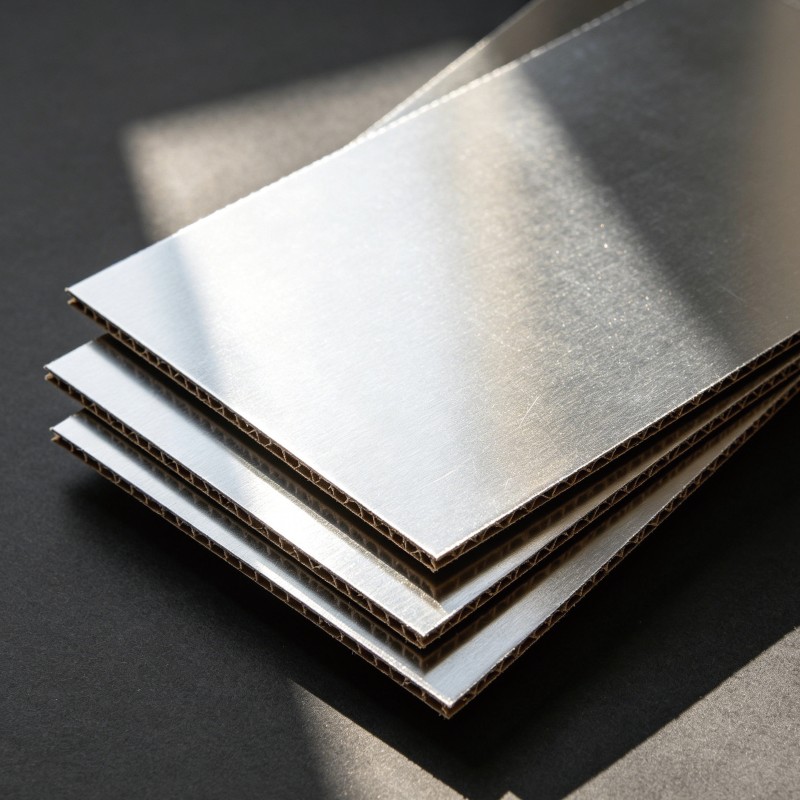
Table of Contents
- 1. What Is Custom Aluminum-Laminated Cardboard?
- 2. What Are the Main Material Structures?
- 3. What Are Its Key Protective Advantages?
- 4. Which Technical Specifications Can Be Customized?
- 5. Where Is Aluminum-Laminated Cardboard Used?
- 6. How Does Manufacturing Quality Affect Performance?
- 7. How Do You Choose the Right Solution?
- 8. Frequently Asked Questions
- 9. Conclusion: Finding a Reliable Packaging Partner
1. What Is Custom Aluminum-Laminated Cardboard?
Custom aluminum-laminated cardboard is a multifunctional composite material produced by bonding an aluminum-based protective layer to a paperboard substrate. Unlike conventional cardboard, which primarily provides structural support, this material combines mechanical rigidity with additional protective capabilities.
The manufacturing process generally involves applying a controlled high-temperature hot-press lamination technique to bond aluminum foil or vacuum-metallized film to different paper-based substrates. The result is a stable composite structure suitable for packaging applications that require improved environmental protection.
Depending on the intended application, the substrate can include:
- Grey board: Suitable for rigid packaging inserts and structural applications.
- White board: Provides a clean surface for packaging structures and decorative applications.
- Kraft paperboard: Offers a practical combination of strength and packaging versatility.
- Corrugated cardboard: Provides additional cushioning and structural support for transportation.
- Specialty paperboard: Supports premium packaging designs requiring specific thickness and rigidity.
By combining different substrates with customized aluminum layers, manufacturers can develop packaging materials that meet specific requirements for protection, appearance, processing, and transportation.
Learn more about ZHONGYI Custom Aluminum-Laminated Cardboard and its available composite structures.
2. What Are the Main Material Structures?
The performance of aluminum-laminated cardboard largely depends on the selected barrier material and its bonding structure. Two common solutions are solid aluminum foil lamination and vacuum-metallized film lamination.
2.1 Solid Aluminum Foil Composite Structure
This structure uses genuine aluminum foil, typically available in thicknesses of 7μm, 9μm, and 12μm, bonded to a paperboard substrate through hot pressing.
Its dense metallic barrier provides excellent resistance to moisture, oxygen, light, and odor transmission. It is particularly suitable for applications requiring higher protection standards, including:
- Tea and traditional medicinal herb packaging.
- Premium dried food and health supplement packaging.
- Industrial chemical powder packaging.
- Moisture-sensitive electronic component protection.
- Long-distance ocean freight packaging.
2.2 Vacuum-Metallized Film Composite Structure
Vacuum-metallized film is generally produced by depositing a thin aluminum coating onto a PET film substrate. It offers an attractive metallic appearance while providing practical moisture and light protection.
Compared with solid aluminum foil structures, this option is often more economical for applications where decorative appearance and general barrier performance are the primary considerations.
Typical applications include premium gift boxes, cultural and creative packaging, decorative backing boards, and general moisture-resistant packaging.
Choosing between these structures requires an assessment of the product's sensitivity, storage environment, transportation distance, and overall packaging budget.
3. What Are Its Key Protective Advantages?
The main advantage of custom aluminum-laminated cardboard is its ability to combine multiple protective functions within one composite packaging material.
3.1 Enhanced Moisture Resistance
Moisture can cause paperboard deformation, food deterioration, powder agglomeration, and damage to sensitive components. The aluminum-based barrier layer helps reduce moisture transmission, making the material suitable for products stored or transported in humid environments.
3.2 Oxygen Barrier Performance
Oxygen exposure can accelerate oxidation in food products and certain industrial materials. Aluminum foil composite structures provide an effective barrier that helps reduce oxygen transmission and maintain product quality.
3.3 Light Protection
Some products are sensitive to light exposure, which can affect their color, stability, or overall quality. The metallic layer blocks light transmission and offers additional protection for light-sensitive products.
3.4 Aroma Retention
Tea, coffee, dried foods, and aromatic products can lose their characteristic smell when exposed to unsuitable packaging environments. Aluminum-laminated structures help reduce aroma loss and unwanted odor transfer.
3.5 Improved Thermal Reflectivity
The reflective aluminum layer can reduce the absorption of radiant heat. When incorporated into suitable packaging systems, it provides supplementary thermal protection and helps moderate environmental temperature fluctuations.
3.6 Processing Compatibility
With appropriate bonding strength and substrate selection, the composite board can undergo various converting operations, including:
- Precision cutting and trimming.
- Die-cutting and slotting.
- Folding and structural forming.
- Gluing and mounting.
- Integration into automated packaging production lines.
These characteristics make aluminum-laminated cardboard a versatile choice for manufacturers seeking both protective performance and efficient downstream processing.
4. Which Technical Specifications Can Be Customized?
Different packaging projects require different combinations of thickness, substrate rigidity, aluminum barrier performance, and surface appearance. Customization allows buyers to select a structure that matches their actual operating conditions rather than relying on a standard material configuration.
The following table summarizes the main customization options available for aluminum-laminated cardboard.
| Specification | Available Options | Typical Considerations |
|---|---|---|
| Aluminum foil thickness | 7μm, 9μm, 12μm | Higher barrier requirements |
| Film structure | Solid aluminum foil or PET-based metallized film | Protection and appearance |
| Base materials | Grey board, white board, kraft board, corrugated board | Rigidity and cushioning |
| Board thickness | 1.5mm–5mm, with customized options | Structural requirements |
| Lamination sides | Single-sided or double-sided | One-way or two-way protection |
| Surface finish | Glossy or matte metallized film | Visual presentation |
| Dimensions | Standard sheets or custom-cut sizes | Production and packaging dimensions |
| Delivery format | Full sheets, cut sheets, semi-finished components | Processing requirements |
Important Factors When Confirming Specifications
Before placing an order, buyers should provide the following information to ensure accurate material recommendations:
- Required board dimensions and thickness.
- Expected aluminum foil or metallized film structure.
- Single-sided or double-sided lamination requirements.
- Intended product and packaging application.
- Printing, cutting, folding, and gluing requirements.
- Expected storage conditions and transportation environment.
- Estimated order quantity and delivery schedule.
Clear specifications help manufacturers optimize material selection, production efficiency, and final packaging performance.
5. Where Is Aluminum-Laminated Cardboard Used?
Because of its combination of barrier protection and structural strength, custom aluminum-laminated cardboard serves multiple industries. Its applications extend beyond traditional gift packaging into food protection, electronics, chemical products, and international logistics.
5.1 Tea, Coffee, and Dry Food Packaging
Tea leaves, coffee, nuts, dried fruits, and nutritional supplements can be affected by moisture, oxygen, and external odors. Aluminum-laminated cardboard is suitable for protective inserts, inner support boards, and rigid packaging structures used in premium food gift boxes.
5.2 Premium Gift and Cultural Packaging
Metallized film creates a distinctive metallic appearance that complements premium packaging designs. Brands can combine attractive visual presentation with additional moisture and light protection, improving the overall packaging experience.
5.3 Electronics and Industrial Products
Electronic components and powdered industrial materials may experience oxidation, moisture absorption, or deterioration during storage and transportation. Aluminum-laminated boards can function as protective liners and separators within suitable packaging systems.
5.4 Cold Chain and Ocean Freight Logistics
International shipping containers can experience significant humidity fluctuations and condensation. Aluminum-laminated cardboard can be incorporated into moisture-resistant packaging systems to help reduce exposure to these conditions.
When combined with suitable waterproof paper pallets and other protective materials, it can provide additional protection for moisture-sensitive cargo.
5.5 Bakery and Snack Packaging
Dry bakery products and snacks often require packaging that helps maintain their original quality. Properly designed aluminum-laminated structures can provide an additional barrier against environmental moisture while supporting attractive retail packaging.
6. How Does Manufacturing Quality Affect Performance?
The performance of aluminum-laminated cardboard depends not only on its raw materials but also on the consistency of its manufacturing process. Poor bonding, uneven coating, or incorrect moisture control can reduce barrier performance and cause problems during subsequent converting operations.
ZHONGYI focuses on several important quality control stages.
6.1 Incoming Material Inspection
Baseboard materials are checked for stiffness, flatness, and moisture content. This helps prevent unsuitable substrates from entering the production process.
6.2 Controlled Hot-Press Lamination
Temperature and bonding pressure are monitored to maintain consistent adhesion between the aluminum-based layer and paperboard substrate. Proper process control helps minimize bubbles, weak bonding, and delamination.
6.3 Surface and Physical Performance Inspection
Finished materials are checked for visible defects, including:
- Wrinkles and surface creases.
- Scratches and pinholes.
- Air bubbles and uneven lamination.
- Insufficient bonding strength.
- Dimensional deviations and edge defects.
6.4 Finished Product Verification
Sample testing can evaluate peel strength, bending performance, surface quality, and dimensional accuracy. ZHONGYI reports a finished-product pass rate of at least 99.6% under its stated inspection process.
For projects requiring environmental or food-contact compliance, buyers should request the applicable SGS, RoHS, and food-contact documentation. Compliance requirements should be verified against the intended application, material configuration, and destination market.
7. How Do You Choose the Right Solution?
Selecting the correct aluminum-laminated cardboard requires balancing protection requirements, processing conditions, and purchasing costs. A higher-specification material is not always necessary for every application.
The following recommendations provide a practical starting point.
| Application Scenario | Recommended Structure | Selection Priority |
|---|---|---|
| Premium tea gift boxes | Solid aluminum foil laminated grey board | Moisture and aroma protection |
| Decorative gift packaging | Metallized PET film laminated board | Metallic appearance and cost control |
| Dry food packaging | Suitable food-contact-grade composite board | Barrier performance and compliance |
| Electronics transportation | Double-sided aluminum foil laminated board | Moisture and oxidation protection |
| Ocean freight protection | Higher-barrier foil composite structure | Humidity resistance |
| Industrial cushioning | Aluminum-laminated corrugated board | Protection and structural strength |
Practical Purchasing Checklist
When evaluating potential suppliers, purchasing managers should consider more than the quoted unit price. The following factors can help reduce procurement risks:
- Material consistency: Confirm that the substrate and aluminum layer meet the required specifications.
- Bonding performance: Request samples for bending, die-cutting, and peel-strength evaluation.
- Barrier requirements: Match the material structure to the actual moisture, oxygen, and light protection requirements.
- Processing compatibility: Confirm suitability for existing printing, cutting, folding, and gluing equipment.
- Quality documentation: Request relevant inspection records and compliance reports.
- Supply capability: Evaluate production capacity, sample services, delivery arrangements, and after-sales support.
Working with an experienced manufacturer helps businesses identify the most suitable composite structure while avoiding unnecessary material costs and performance limitations.
8. Frequently Asked Questions
Q1: What makes custom aluminum-laminated cardboard different from ordinary cardboard?
Ordinary cardboard mainly provides structural support and basic packaging protection. Custom aluminum-laminated cardboard incorporates an aluminum foil or metallized film layer that improves resistance to moisture, oxygen, and light. It also helps retain product aromas, making it more suitable for demanding packaging applications.
Q2: What is the difference between aluminum foil and metallized film lamination?
Solid aluminum foil provides stronger overall barrier protection and is recommended for moisture-sensitive products, dry food packaging, and demanding transportation environments. Metallized PET film offers an attractive metallic finish and more economical protection for decorative gift boxes and general packaging applications. The appropriate choice depends on the required barrier performance and budget.
Q3: Can aluminum-laminated cardboard be customized in different thicknesses and sizes?
Yes. The material can be customized using different paperboard substrates, aluminum layer thicknesses, lamination structures, and sheet dimensions. ZHONGYI offers standard board thicknesses from 1.5mm to 5mm, with additional customized options available according to project requirements.
Q4: Is aluminum-laminated cardboard suitable for direct food contact?
Only specifically qualified food-contact-grade versions should be considered for direct food contact. Buyers should verify the aluminum film, adhesive, substrate, and applicable food-contact test reports before selecting a product. Industrial-grade composite boards should not automatically be treated as food-contact materials.
Q5: Can this material withstand international ocean transportation?
Aluminum-laminated cardboard can provide additional moisture and oxygen barrier protection in suitable packaging configurations. For long-distance ocean freight, buyers should consider higher-barrier aluminum foil structures, appropriate lamination sides, and complementary moisture-control measures. Actual performance depends on the complete packaging system and transportation conditions.
Q6: Can aluminum-laminated cardboard undergo die-cutting and folding?
Yes. Properly manufactured composite boards are suitable for die-cutting, slotting, bending, and gluing. However, processing conditions should be tested before mass production to ensure that the aluminum layer remains properly bonded and that the finished edges meet the required quality standards.
Q7: How can buyers verify the quality before ordering in bulk?
Buyers can request samples and evaluate surface flatness, lamination adhesion, bending performance, cutting quality, and moisture resistance. They should also review relevant material specifications, inspection records, and compliance documents before confirming a large production order.
9. Conclusion: Finding a Reliable Packaging Partner
Custom aluminum-laminated cardboard offers an effective combination of paperboard strength, aluminum-based barrier protection, and flexible customization. From premium tea packaging and dry food protection to electronics transportation and industrial logistics, it helps businesses address packaging challenges that ordinary paperboard may not adequately solve.
Choosing the right substrate, aluminum structure, thickness, and lamination configuration is essential to achieving reliable performance and cost efficiency. With controlled hot-press lamination, flexible material options, customized dimensions, and comprehensive quality inspection, ZHONGYI provides composite paperboard solutions for different industrial and commercial packaging requirements.
Looking for a dependable manufacturer of Custom Aluminum-Laminated Cardboard? Whether you need high-barrier aluminum foil board, decorative metallized film cardboard, customized sheet dimensions, or specialized packaging materials for international transportation, ZHONGYI is ready to support your project. Visit our product page to explore available solutions and contact us today for professional technical advice, product samples, and a competitive quotation.
Send Inquiry
-
E-mail
X
We use cookies to offer you a better browsing experience, analyze site traffic and personalize content. By using this site, you agree to our use of cookies.
Privacy Policy
News
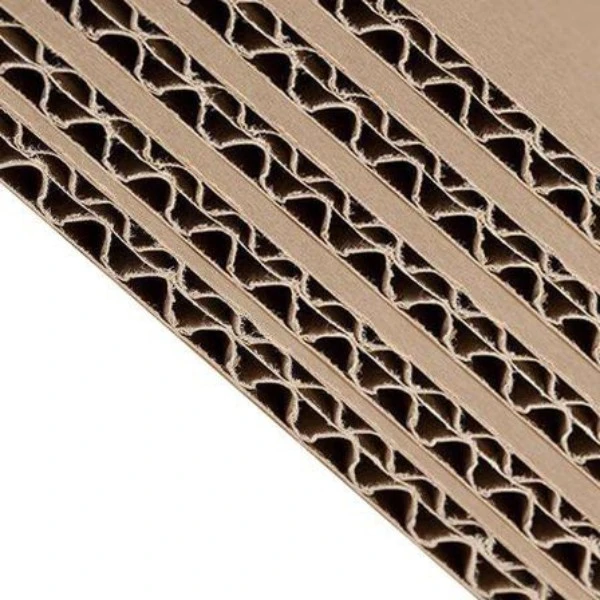 What Makes BB-Flute Double-Wall Corrugated Board the Smart Choice for Medium-Duty Packaging2026/11/25
When packaging teams look for a board that balances thickness, compression support, and cushioning without over-engineering the box, Zhongyi Intelligent Packaging Co., Ltd. often recommends BB-Flute Double-Wall Corrugated Board. As a five-layer construction with two B-flute layers, this board delive......
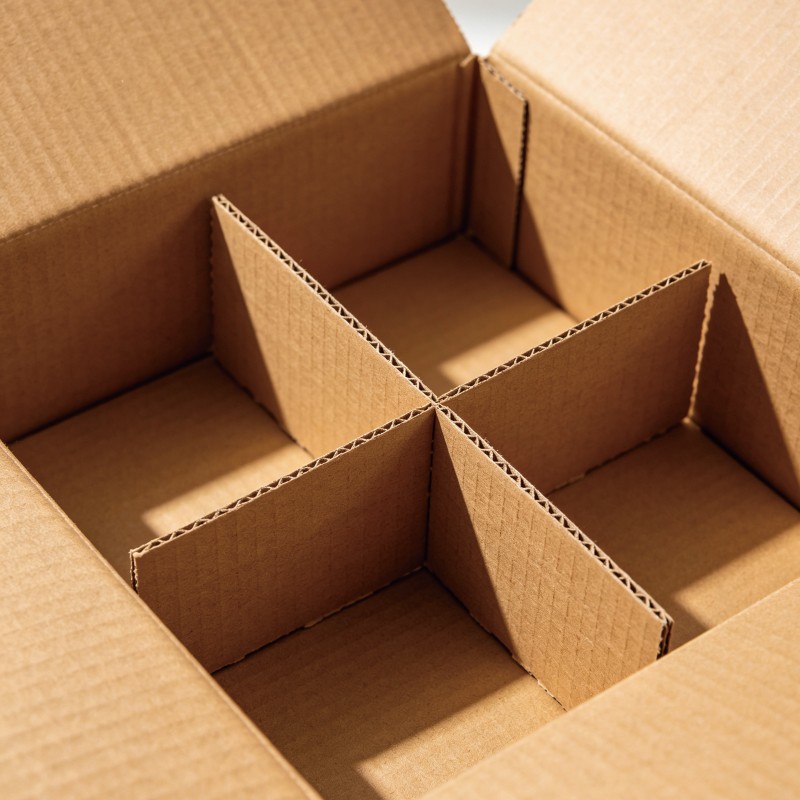 What Makes Cross-Slot Cardboard Dividers the Smartest Packaging Upgrade for Fragile and High-Value Goods2026/11/20
If you are sourcing protective inserts for shipping cartons, retail boxes, or gift boxes, this guide from Zhongyi answers that question with practical, factory-direct insights. As a specialized manufacturer of cross-slot cardboard dividers, Zhongyi helps brands cut damage rates, reduce packing time,......