



Call Us
+86-18332577666
Email Us
xiaomengxuan123@126.com

What Makes Cross-Slot Cardboard Dividers the Smartest Packaging Upgrade for Fragile and High-Value Goods
If you are sourcing protective inserts for shipping cartons, retail boxes, or gift boxes, this guide from Zhongyi answers that question with practical, factory-direct insights. As a specialized manufacturer of cross-slot cardboard dividers, Zhongyi helps brands cut damage rates, reduce packing time, and lower storage costs with flat-packed, recyclable corrugated grids.
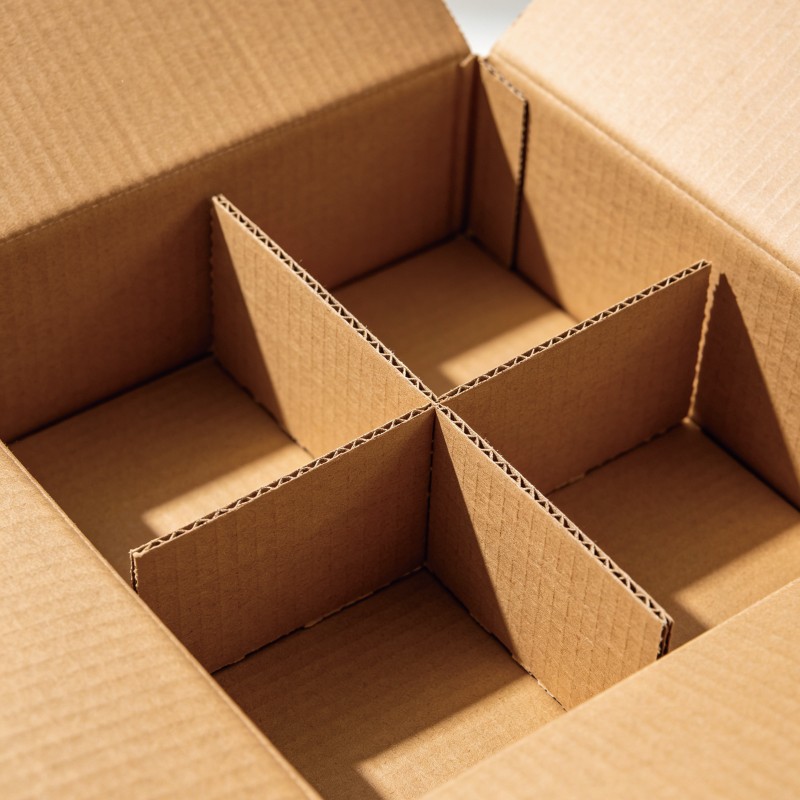
Table of Contents
- What Are Cross-Slot Cardboard Dividers?
- Why Choose Cross-Slot Cardboard Dividers?
- How to Select the Right Cross-Slot Dividers?
- Which Applications Benefit Most?
- When Should You Order Custom Dividers?
- Specification Quick-Reference Table
- FAQ
What Are Cross-Slot Cardboard Dividers?
Cross-slot cardboard dividers — also called grid-style partitions or interlocking cardboard inserts — are made from corrugated cardboard sheets with precision-cut slots. Horizontal and vertical sheets interlock to form uniform, independent square or rectangular compartments inside a shipping carton, retail box, or gift box. The result is a self-supporting grid that keeps products separated, cushioned, and centered during transit.
At Zhongyi, cross-slot cardboard dividers are produced with CNC slotting to ensure consistent slot depth and a secure interlock. The dividers ship flat, assemble in seconds, and can be reused several times in dry, ventilated conditions. They are recyclable, odorless, and compatible with food-grade and export packaging requirements.
Why Choose Cross-Slot Cardboard Dividers?
Cross-slot dividers solve three packaging problems at once: product damage, packing speed, and storage cost. Unlike loose fill or foam inserts, they create fixed cells that prevent items from touching, rubbing, or crushing each other. Corrugated flutes add natural cushioning, so fragile fruit, glass bottles, ceramics, and hardware arrive in better condition.
- Damage reduction: Independent cells stop collisions, scratches, and compression marks.
- Faster packing: One person can assemble a unit in about 10 seconds; staff learn the process quickly.
- Lower logistics cost: Flat-packed dividers save warehouse shelf space and maximize container loading.
- Eco-friendly: Paper-based, recyclable, and a cost-effective alternative to foam fillers.
- Stronger cartons: The interlocking grid reinforces sidewalls and improves stacking strength.
How to Select the Right Cross-Slot Dividers?
Choosing the right divider starts with the product dimensions, not the carton size. Measure the diameter or footprint of the largest item, add clearance for easy loading and unloading, and then choose a grid layout that matches the carton’s internal dimensions. Material grade depends on product weight and fragility.
- Measure the product: Note diameter, height, and weight per unit.
- Choose cell size: Standard inner cell dimensions range from 30 mm to 150 mm; custom sizes are available.
- Pick the flute grade: E-flute for light items up to 5 kg per cell; B-flute for daily goods up to 10 kg; A-flute for fragile ceramics; 5-layer EB/AB for heavy items up to 25 kg.
- Set the grid layout: Common layouts include 2×2, 2×3, 3×3, 3×4, 4×5, 4×6, and 5×8; custom molds support non-standard layouts.
- Confirm height: Divider height can range from 20 mm to 300 mm; a height around two-thirds of the product is often recommended to save material while still separating items.
Which Applications Benefit Most?
Cross-slot dividers are most valuable when products are uniform, fragile, or high-value. They are widely used for fresh produce such as oranges, apples, pomegranates, and kiwifruit; glass wine bottles; ceramic cups and jars; cosmetic containers; small stamped hardware; automotive components; canned foods; 3C digital accessories; and holiday gift sets. Exporters also use slotted divider sheets for small-item packaging where foam or molded inserts would be too costly or bulky.
When Should You Order Custom Dividers?
Order custom cross-slot dividers when your product dimensions fall outside standard cell sizes, when your carton internal dimensions require a specific grid count, or when you need food-grade, anti-static, or water-resistant laminated board. Custom orders typically take 3–5 business days, while standard stock configurations can ship within 48 hours. If you are launching a new product line or changing carton dimensions, custom dividers ensure a precise drop-in fit without modifying the outer packaging.
Specification Quick-Reference Table
| Parameter | Standard Range / Option | Notes |
|---|---|---|
| Single-cell inner dimensions | 30 mm – 150 mm | Suitable for fruit, bottles, hardware, and cans |
| Divider height | 20 mm – 300 mm | Cut to specification |
| Standard grid layouts | 2×2, 2×3, 3×3, 3×4, 4×5, 4×6, 5×8 | Custom molds available |
| 3-layer E-flute | Approx. 2 mm thick; ≤5 kg per cell | Lightweight goods, fruit, light glass bottles |
| 3-layer B-flute | Approx. 2.5 mm thick; ≤10 kg per cell | Daily necessities, small hardware |
| 3-layer A-flute | Approx. 3.5 mm thick | Fragile ceramics, premium fresh fruit |
| 5-layer EB/AB flute | 4.5–6 mm thick; ≤25 kg per cell | Metal components, heavy canned goods |
| Surface options | Natural kraft, white-top liner, single-sided waterproof lamination | Single-color printing available |
Assembly and Packing Tips
- Assemble the divider on a flat surface; interlock the horizontal and vertical sheets fully before placing products.
- Center products in each cell to maintain even cushioning and avoid pressure points.
- Reinforce the carton bottom with tape when packing heavy items such as glass bottles or canned goods.
- Store unused flat-packed dividers in a dry, ventilated area to protect board rigidity.
- For long-distance ocean transport, combine dividers with bubble wrap for extra protection.
FAQ
Q1: What is the maximum product diameter that fits in a single cell of the cross-slot divider?
A: Customization is available for cell inner dimensions ranging from 30 mm to 150 mm. Standard sizes are available for fresh fruit at 80–100 mm and glass bottles at 60–90 mm.
Q2: What is the maximum load capacity of the cross-slot divider?
A: A single cell made of 3-layer E-flute supports up to 5 kg; a cell made of 5-layer extra-rigid board supports up to 25 kg. The 5-layer version is recommended for heavy metal components.
Q3: Is assembly difficult for cross-slot cardboard dividers shipped flat?
A: No. Assembly simply requires interlocking the horizontal and vertical slotted pieces. One person can assemble a unit in about 10 seconds, which keeps packaging lines efficient.
Q4: Are anti-static cross-slot dividers needed for packaging electronic accessories?
A: Anti-static corrugated dividers can be customized for electronic components such as chips and circuit boards to prevent electrostatic damage.
Q5: Which offers better cost-performance: cross-slot dividers or molded inserts?
A: Flat-packed cross-slot dividers are preferred for long-term bulk stocking because they lower storage and logistics costs. Molded die-cut inserts are suitable for small-batch packaging of high-end gift boxes.
Q6: Are cross-slot dividers sufficient protection for fragile glass items?
A: Dividers are adequate for standard short-distance logistics. For long-distance ocean transport, wrapping products in bubble wrap alongside the dividers provides dual protection and reduces breakage.
Q7: Can the divider height be lower than the carton height?
A: Yes. Divider height can be trimmed as needed. A recommended height is about two-thirds of the product, which ensures effective separation without wasting material.
Conclusion
Cross-slot cardboard dividers are a practical, recyclable, and cost-effective way to protect products and streamline packing. Zhongyi supplies custom and standard cross-slot dividers with CNC precision slotting, multiple flute grades, and flat-packed shipping. To discuss your carton dimensions, product sizes, and target lead times, contact us today for a free layout recommendation, free samples, and a fast quotation.
Send Inquiry
-
E-mail
X
We use cookies to offer you a better browsing experience, analyze site traffic and personalize content. By using this site, you agree to our use of cookies.
Privacy Policy
News
 What Makes BB-Flute Double-Wall Corrugated Board the Smart Choice for Medium-Duty Packaging2026/11/25
When packaging teams look for a board that balances thickness, compression support, and cushioning without over-engineering the box, Zhongyi Intelligent Packaging Co., Ltd. often recommends BB-Flute Double-Wall Corrugated Board. As a five-layer construction with two B-flute layers, this board delive......
 What Makes Cross-Slot Cardboard Dividers the Smartest Packaging Upgrade for Fragile and High-Value Goods2026/11/20
If you are sourcing protective inserts for shipping cartons, retail boxes, or gift boxes, this guide from Zhongyi answers that question with practical, factory-direct insights. As a specialized manufacturer of cross-slot cardboard dividers, Zhongyi helps brands cut damage rates, reduce packing time,......