



Call Us
+86-18332577666
Email Us
xiaomengxuan123@126.com

Home
>
Products > Corrugated Cardboard
> EE-Flute Double Wall Corrugated Cardboard
>
High-Compression EE-Flute Double Wall Corrugated Board



High-Compression EE-Flute Double Wall Corrugated Board
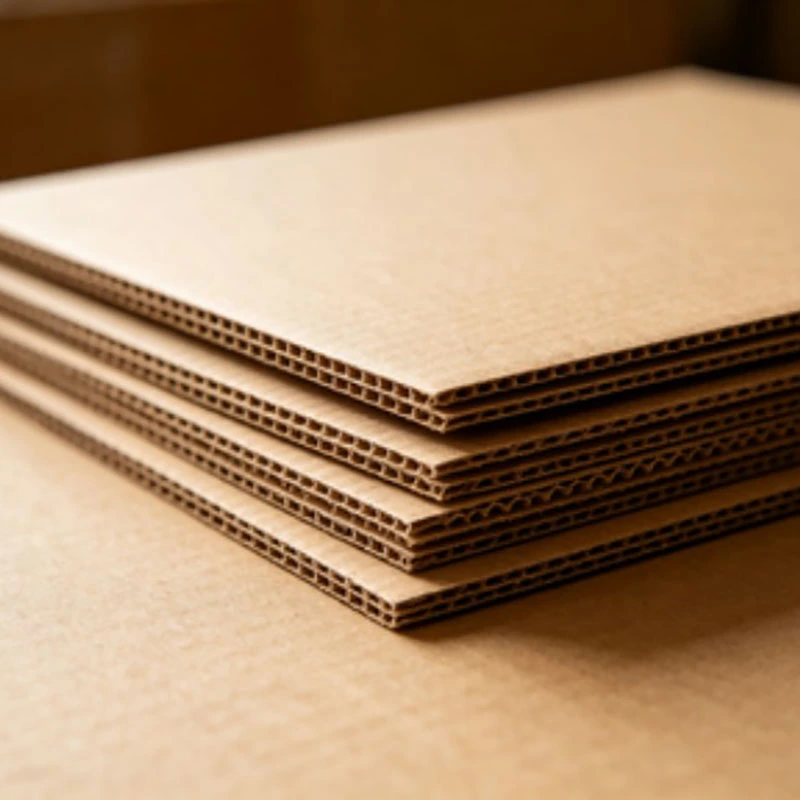
High-Compression EE-Flute Double Wall Corrugated Board is based on a five-layer EE structure. Its load-bearing performance is improved through the selection of base paper with appropriate strength, optimization of paper combinations, and control of flute forming. It is suitable for certain packaging applications that require carton support and stacking stability. Zhongyi Intelligent Packaging Co., Ltd. can evaluate suitable configurations according to carton dimensions, cargo weight, and transportation conditions, balancing printing requirements with actual strength requirements.
Send Inquiry
Product Description
High-Compression EE-Flute Double Wall Corrugated Board is based on a five-layer EE structure. By adjusting the strength configurations of the outer liner, medium, and inner liner, while controlling flute forming and bonding processes, the board's support and load-bearing performance can be improved. The product is suitable for packaging projects with certain stacking and transportation load-bearing requirements. Customers can obtain a quotation for High-Compression EE-Flute Double Wall Corrugated Board based on cargo weight, carton dimensions, and testing standards to evaluate suitable material configurations.
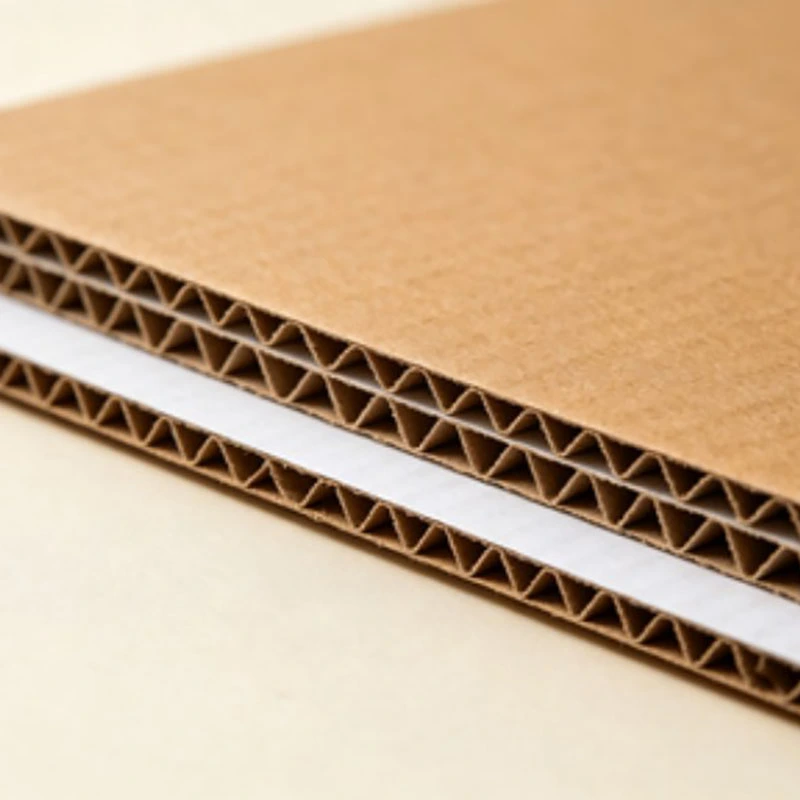
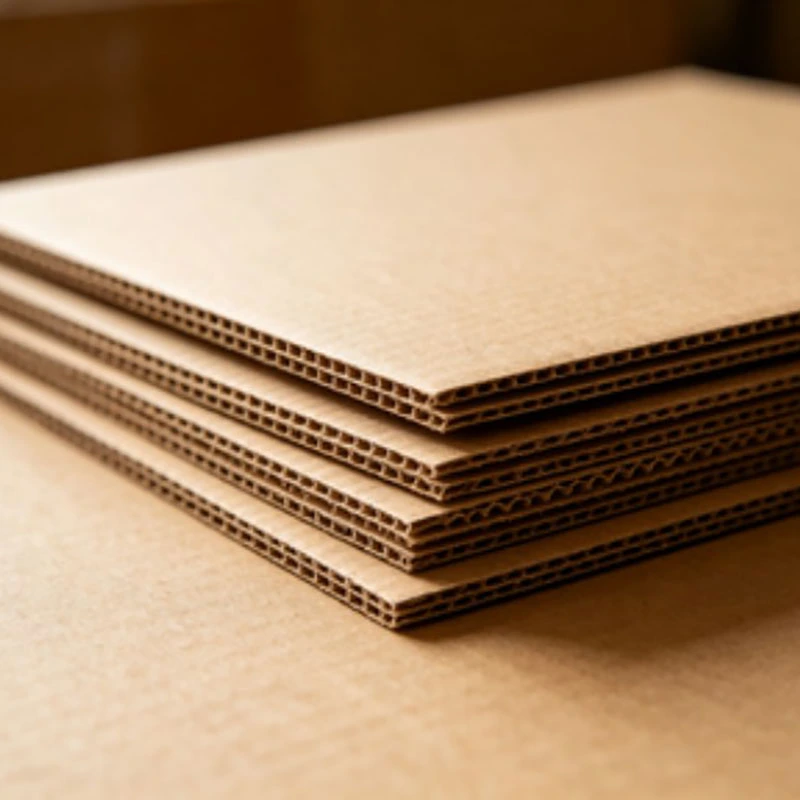
I. What Is High-Compression EE-Flute Double Wall Corrugated Board?
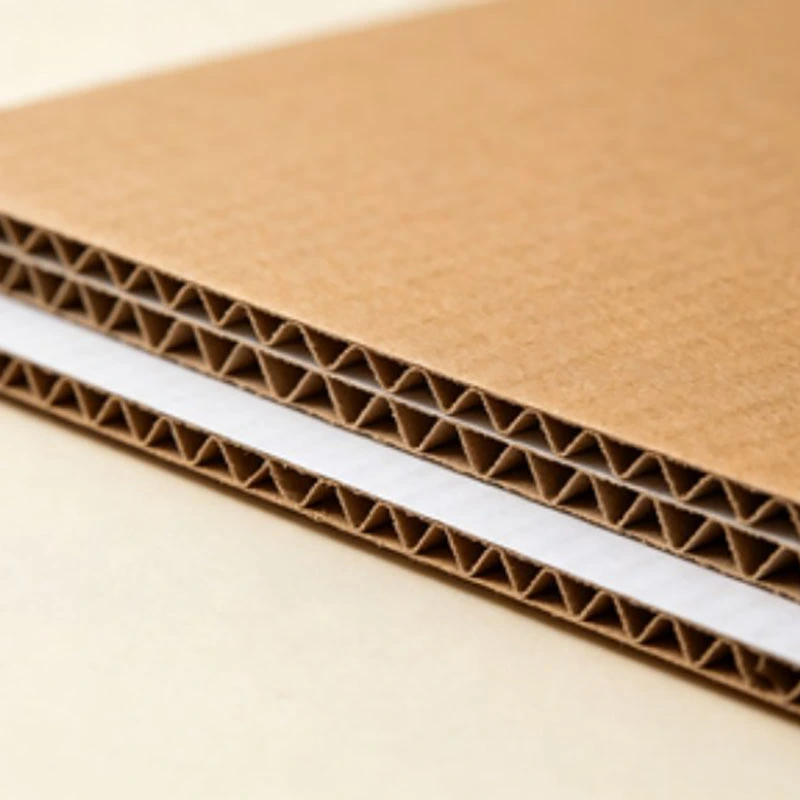
High-Compression EE-Flute Double Wall Corrugated Board is a five-layer corrugated board with an optimized configuration for load-bearing requirements. Its basic structure consists of an outer liner, an E-flute layer, a central liner, another E-flute layer, and an inner liner.
Compared with standard EE double-wall corrugated board, the focus of the high-compression type is not simply on increasing thickness. Instead, it involves selecting appropriate outer liner, medium, and inner liner materials, while controlling flute-forming quality and bonding conditions, so that the board achieves the required support performance under specified usage conditions.
It should be noted that E-flutes are relatively fine and have a low flute height. Even when reinforced base paper is used, it cannot be directly assumed that its load-bearing capacity will necessarily exceed that of all BB- or BE-flute double-wall corrugated board products. Suitability should be determined based on actual test data and assembled carton performance.
II. How Does High-Compression EE-Flute Double Wall Corrugated Board Improve Load-Bearing Performance?
1. Optimize Outer and Inner Liner Configurations
The strength of the outer layers of paper affects the performance of the overall structure. Selecting appropriate base paper according to project requirements can improve the board's supporting foundation, but the actual results still depend on paper properties and the combination of paper grades and basis weights.
2. Focus on Corrugated Medium Performance
The two E-flute layers provide structural support for the board. Medium quality, flute integrity, and any crushing that occurs during forming can all affect the final board performance.
3. Ensure Bonding Quality Between Layers
Insufficient bonding may cause delamination between layers and affect the integrity of the board. During production, the application of adhesive, bonding, and pressing processes need to be controlled to prevent processing issues from weakening structural performance.
4. Design in Combination with Carton Structure
Board strength is not equivalent to the compression strength of an assembled carton. Carton length, width, and height, opening area, joint methods, and box style all affect load-bearing performance. For projects requiring multi-layer stacking, board selection should be considered together with carton design.
III. What Applications Are Suitable for High-Compression EE-Flute Double Wall Corrugated Board?
Packaging for Lightweight Industrial Goods and Accessories
Suitable for certain small components, tool accessories, and industrial supplies that require a certain degree of carton support. If the products themselves are relatively heavy, carton strength should first be verified against the requirements.
Retail Products Requiring Neat Stacking
For packaging that requires warehousing, sorting, and stacking to a certain number of layers, structural stability can be improved by adjusting the base paper configuration. The actual allowable stacking height still needs to be determined according to carton testing and storage conditions.
Packaging Requiring Both Printing Quality and Support
When packaging requires both a relatively flat printing surface and more substantial support than standard lightweight packaging, the suitability of a reinforced EE structure can be evaluated.
Packaging Projects with Limited Dimensions
For packaging designs that should avoid significantly increasing carton thickness, reinforced EE can be considered as a candidate solution and compared with other flute types through sample testing and cost evaluation.
IV. What Is the Difference Between High-Compression EE-Flute Double Wall Corrugated Board and Standard EE?
| Comparison Item | Standard EE Double-Wall Corrugated Board | High-Compression EE-Flute Double Wall Corrugated Board |
| Basic structure | Five-layer EE | Five-layer EE |
| Base paper configuration | Selected for conventional applications | Optimized for load-bearing requirements |
| Design focus | Printing, dimensions, and general protection | Support, edge crush strength, and stacking requirements |
| Strength indicators | Determined according to application | Target indicators must be specified and verified |
| Suitable applications | Conventional lightweight packaging | Packaging with additional load-bearing requirements |
High-Compression EE-Flute Double Wall Corrugated Board is not a standardized industry strength grade. Performance may vary depending on the manufacturer, paper combination, and production processes. Actual agreed performance indicators should be used as the basis for purchasing decisions.
V. Key Technical Parameters and Testing Requirements
Parameters for High-Compression EE-Flute Double Wall Corrugated Board should be established according to usage conditions. Fixed numerical values should not be applied directly before the base paper combination and testing methods have been determined.
| Parameter | Key Points to Confirm When Purchasing |
| Corrugated structure | Five-layer EE double-wall corrugated board |
| Base paper configuration | Specific requirements for the outer liner, medium, central liner, and inner liner |
| Board thickness | Confirm based on actual samples and production specifications |
| Edge Crush Test (ECT) | Agree on requirements according to carton support and stacking needs |
| Bursting strength | Determine according to transportation and cargo protection requirements |
| Carton compression strength | Test the assembled carton when necessary |
| Environmental conditions | Specify requirements such as temperature, humidity, and storage duration |
Edge crush strength is mainly used to evaluate the load-bearing capacity of the board in the edge direction, while carton compression testing evaluates the overall load-bearing performance of the assembled carton. The two cannot replace each other.
If the packaging will be used in humid environments, changes in board strength after moisture exposure must also be considered. Decisions should not be based solely on data obtained under dry conditions.
VI. How to Determine the Paper Configuration for High-Compression EE-Flute Double Wall Corrugated Board
Purchasers are advised to prepare the following information in advance:
Carton length, width, height, and style;
Weight of the contents per carton;
Expected stacking layers and storage duration;
Transportation methods and handling conditions;
Required edge crush strength or carton compression strength;
Printing, die-cutting, and folding requirements.
If carton compression test results are already available, the target values and testing conditions can be provided. If there are no clearly defined indicators, suitable configurations can be determined progressively through sample packing, stacking tests, and transportation validation.
For projects with higher load-bearing requirements, it is also advisable to compare High-Compression EE-Flute Double Wall Corrugated Board with other structures, such as BB and BE, through practical testing rather than assuming in advance that one flute type must be more suitable.
VII. Customization and Purchasing Services from Zhongyi Intelligent Packaging Co., Ltd.
Zhongyi Intelligent Packaging Co., Ltd. can evaluate the base paper configuration and processing solutions for High-Compression EE-Flute Double Wall Corrugated Board according to customers' packaging structures, cargo weights, and strength requirements.
For carton specifications used over the long term, paper configurations can be optimized through sample confirmation and testing feedback to reduce variations in thickness, forming, and bonding between different production batches.
To purchase High-Compression EE-Flute Double Wall Corrugated Board, customers can provide carton dimensions, weight per carton, stacking conditions, and target strength requirements to facilitate confirmation of the product configuration. For orders with specific acceptance requirements, it is advisable to agree in advance on testing methods, indicators, and sampling standards.
When requesting a quotation, customers should also verify the paper configuration, strength requirements, order quantity, and processing methods to avoid comparing products with different configurations solely on a per-square-meter price basis.
VIII. Frequently Asked Purchasing Questions (FAQ)
Q1: Is High-Compression EE-Flute Double Wall Corrugated Board always thicker than standard EE?
A: Not necessarily. Strength can be improved through base paper configuration and process control. Thickness is not the only criterion.
Q2: Is High-Compression EE-Flute Double Wall Corrugated Board suitable for multi-layer stacking?
A: It can be evaluated for stacking applications, but the specific number of layers should be determined through carton compression testing and consideration of storage conditions.
Q3: Can High-Compression EE-Flute Double Wall Corrugated Board replace BB double-wall corrugated board?
A: Not necessarily. The two have different structures and should be compared according to load-bearing, cushioning, thickness, and cost requirements before selection.
Q4: What determines the load-bearing capacity of High-Compression EE-Flute Double Wall Corrugated Board?
A: It mainly depends on base paper strength, flute-forming quality, bonding performance, and carton structure. It cannot be determined solely by board thickness.
Q5: What factors mainly affect the price of High-Compression EE-Flute Double Wall Corrugated Board?
A: The price mainly depends on base paper grade, basis weight configuration, board dimensions, order quantity, and processing requirements. Customers can request a quotation from the manufacturer based on specific specifications.
Related Products
B-Flute Corrugated Cardboard
C-Flute Corrugated Cardboard
E-Flute Corrugated Cardboard
BC-Flute Double Wall Corrugated Cardboard
BE-Flute Double Wall Corrugated Cardboard
BB-Flute Double Wall Corrugated Cardboard
EE-Flute Double Wall Corrugated Cardboard
Send Inquiry
Please feel free to fill your inquiry in the form below. We will reply you in 24 hours.
-
E-mail
X
We use cookies to offer you a better browsing experience, analyze site traffic and personalize content. By using this site, you agree to our use of cookies.
Privacy Policy
News
 What Makes BB-Flute Double-Wall Corrugated Board the Smart Choice for Medium-Duty Packaging2026/11/25
When packaging teams look for a board that balances thickness, compression support, and cushioning without over-engineering the box, Zhongyi Intelligent Packaging Co., Ltd. often recommends BB-Flute Double-Wall Corrugated Board. As a five-layer construction with two B-flute layers, this board delive......
 What Makes Cross-Slot Cardboard Dividers the Smartest Packaging Upgrade for Fragile and High-Value Goods2026/11/20
If you are sourcing protective inserts for shipping cartons, retail boxes, or gift boxes, this guide from Zhongyi answers that question with practical, factory-direct insights. As a specialized manufacturer of cross-slot cardboard dividers, Zhongyi helps brands cut damage rates, reduce packing time,......