



Call Us
+86-18332577666
Email Us
xiaomengxuan123@126.com

How Can Flat Corrugated Cardboard Liners Improve Packaging Protection and Reduce Shipping Costs
ZHONGYI provides Flat Corrugated Cardboard Liners designed to improve carton stability, protect products during transportation, and simplify warehouse packaging. With customizable dimensions and multiple material options, these practical paper-based sheets help manufacturers, distributors, and logistics companies build more efficient packaging systems.
Flat corrugated cardboard liners are versatile packaging components used to separate product layers, reinforce carton bottoms, distribute stacking pressure, and stabilize palletized goods. Their flat, ready-to-use design eliminates complicated assembly while supporting efficient packing operations across beverage production, hardware manufacturing, electronics, fresh produce, and e-commerce fulfillment. By selecting the appropriate board structure, thickness, and dimensions, businesses can improve packaging consistency and reduce damage caused by friction, compression, and shifting. This guide explains their structure, key benefits, material options, industrial applications, and selection criteria, helping purchasing teams identify a cost-effective solution for their packaging requirements.
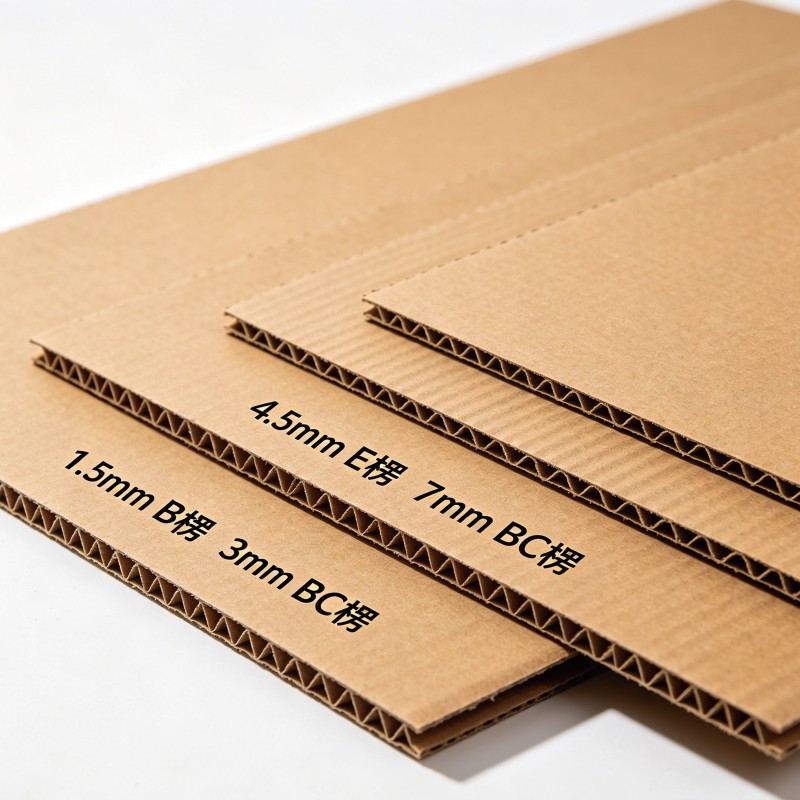
Table of Contents
- What Are Flat Corrugated Cardboard Liners?
- How Do Flat Corrugated Cardboard Liners Work?
- What Are the Main Benefits of Flat Cardboard Liners?
- Which Materials and Specifications Should You Choose?
- Where Are Flat Corrugated Cardboard Liners Used?
- How Can You Select the Right Packaging Liners?
- What Quality Factors Should Buyers Evaluate?
- Frequently Asked Questions
What Are Flat Corrugated Cardboard Liners?
Flat corrugated cardboard liners are rectangular protective sheets made from paperboard or corrugated cardboard. Unlike molded inserts or slotted dividers, these liners have a simple, flat structure without interlocking joints. They can be placed directly inside cartons, between product layers, or on pallet surfaces without additional assembly.
Their primary purpose is to create a stable protective layer within a packaging system. Depending on the application, a liner may separate rows of products, support the bottom of a carton, distribute weight across stacked packages, or provide a level surface between palletized layers.
For businesses handling large volumes of packaged goods, this simple structure can improve operational efficiency. Workers can position each sheet quickly, while standardized dimensions help maintain consistent packing procedures across production lines and distribution centers.
ZHONGYI offers customizable liner dimensions and material configurations to accommodate different carton sizes and product weights. Buyers can explore complementary corrugated cardboard materials when developing a complete packaging solution.
How Do Flat Corrugated Cardboard Liners Work?
Although flat liners have a straightforward appearance, their performance depends on how they interact with the carton, the packaged goods, and external forces during handling and transportation.
1. Separating Product Layers
When goods are stacked in multiple layers, direct contact can cause abrasion, scratches, or localized pressure. A flat liner creates a barrier between the layers, reducing surface-to-surface contact and helping keep products organized.
2. Distributing Stacking Pressure
Stacked cartons and palletized products experience pressure from the weight above them. A suitably selected liner provides a more continuous supporting surface, helping distribute loads across a wider area. Actual load performance depends on board construction, moisture conditions, carton design, and stacking height.
3. Stabilizing Products During Transit
Vibration, braking, loading, and unloading can cause packaged goods to shift. Properly sized liners help maintain separation between layers and can work with dividers or other inserts to create a more organized internal structure.
4. Supporting Efficient Packing
Because the sheets arrive flat and ready to use, employees do not need to assemble complicated components. This makes them suitable for repetitive packing tasks, particularly when standardized cartons and consistent product arrangements are involved.
What Are the Main Benefits of Flat Cardboard Liners?
For manufacturers and logistics operators, packaging materials must balance protection, cost, handling convenience, and storage efficiency. Flat corrugated cardboard liners offer several practical advantages.
- Simple operation: The one-piece structure requires no folding, splicing, glue, or tape during normal placement.
- Improved surface protection: The sheets separate products and reduce friction between adjacent layers.
- Better load distribution: Properly selected board grades provide a supporting layer beneath stacked goods.
- Flexible sizing: Custom-cut sheets can be matched to carton interiors, packaging trays, or pallet dimensions.
- Efficient storage: Flat sheets can be stacked compactly before use, reducing the space required for bulky packaging accessories.
- Paper-based construction: Unlaminated paperboard is generally compatible with established paper recycling streams where local facilities accept the material.
- Integration with other inserts: Liners can be combined with corrugated dividers to separate individual items and protect entire product layers.
These benefits are particularly relevant to operations that handle uniform products in large quantities. However, a liner is not a substitute for every protective component. Fragile goods, liquid containers, and products with irregular shapes may require additional cushioning, compartmentalization, or moisture protection.
Which Materials and Specifications Should You Choose?
The right liner depends on the weight of the goods, stacking requirements, carton dimensions, handling conditions, and exposure to moisture. Selecting material based only on price may result in insufficient rigidity or unnecessary packaging expense.
The following table provides a practical comparison of common material configurations. These are general selection guidelines; final specifications should be confirmed with the packaging manufacturer.
| Material Configuration | Main Characteristics | Typical Applications | Selection Consideration |
|---|---|---|---|
| Single-layer kraft board | Lightweight and easy to handle | Light products and basic layer separation | Best when heavy load-bearing performance is unnecessary |
| 3-ply B-flute corrugated board | Relatively thin, rigid, and practical for general packaging | Consumer goods, cartons, and light-to-medium products | Balance thickness with required compression resistance |
| 3-ply C-flute corrugated board | Combines cushioning and structural support | General distribution and layered product packaging | Consider carton dimensions and stacking conditions |
| 5-ply BC-flute corrugated board | Double-wall construction for greater structural support | Heavy products, industrial goods, and demanding shipping environments | Confirm the required load capacity through testing |
| Moisture-resistant treated board | Additional resistance to moisture under specified conditions | Humid warehouses and selected export applications | Verify treatment performance and recycling compatibility |
ZHONGYI's product information identifies standard linerboard weights of approximately 170–250 g, with heavier grades available for customized industrial requirements. The required grammage and board structure should be determined alongside thickness, flute profile, compression resistance, and finished dimensions.
For additional material information, review E-flute corrugated cardboard and BC-flute double-wall corrugated cardboard to understand how different board constructions can support different packaging needs.
Where Are Flat Corrugated Cardboard Liners Used?
Flat liners are adaptable packaging accessories suitable for many industries. Their application depends on the physical characteristics of the goods and the way products are packed, stored, and transported.
Beverage Manufacturing and Distribution
Bottled drinks and canned beverages are frequently packed in multiple layers. Corrugated liners can separate these layers, reduce rubbing between packages, and provide a more even support surface during stacking and warehouse handling.
Hardware and Automotive Components
Metal parts, bearings, stamped components, and coated accessories may be damaged by direct contact. Flat sheets create a separation layer that helps reduce scratches and surface abrasion. Dividers may be added when individual components need to remain isolated.
Fresh Produce and Gift Packaging
Fruit cartons and gift boxes can use liners to separate product layers and distribute contact pressure. Because produce is sensitive to crushing, the board structure and packing arrangement should be selected carefully to avoid transferring excessive weight to the lower layer.
Electronics and Lighting
Lighting components, small appliances, and selected electronic products benefit from orderly packaging. Flat liners can support the carton base and separate tiers, while dedicated inserts or cushioning materials protect delicate surfaces and components from impact.
E-Commerce and Export Logistics
For high-volume fulfillment, standardized liners can simplify repetitive packing tasks and improve consistency. They may also be used between pallet layers to create a more even stacking surface. Packaging performance should be validated for the actual shipping route, product weight, and handling conditions.
How Can You Select the Right Packaging Liners?
Purchasing teams should evaluate the entire packaging system rather than choosing liners in isolation. A practical selection process reduces dimensional errors and helps prevent unnecessary material costs.
- Measure the usable internal dimensions. Record the carton's internal length and width, accounting for existing inserts and the available clearance.
- Identify the product weight and arrangement. Determine how many items will sit on each layer and whether the load is distributed evenly.
- Choose the board construction. Compare single-layer board, single-wall corrugated board, and double-wall options according to the required rigidity and cushioning.
- Assess environmental conditions. Consider humidity, condensation, warehouse storage, and the duration of transportation. Request suitable treatments where necessary.
- Determine cutting tolerances. Sheets that are too large may buckle or interfere with carton closure, while undersized sheets may leave unsupported areas.
- Request samples before mass production. Check the fit, surface finish, rigidity, and compatibility with existing packing procedures.
- Test the complete package. Conduct appropriate stacking, vibration, compression, or distribution tests based on the risks associated with the shipment.
When liners are combined with compartmentalized inserts, review corrugated cardboard dividers for applications requiring individual product separation. The combination can provide both layer-level support and item-level organization.
What Quality Factors Should Buyers Evaluate?
Consistent product quality is essential when packaging accessories are purchased in bulk. Even small variations in dimensions or board condition can affect packing efficiency and the performance of the finished carton.
Before confirming an order, buyers should review the following quality factors:
- Material consistency: Check that the selected paper grade and board structure match the agreed specifications.
- Dimensional accuracy: Verify sheet length, width, squareness, and cutting tolerance against the carton design.
- Surface flatness: Look for excessive warping, bulging, curling, or other defects that may affect placement.
- Bonding integrity: For corrugated products, inspect the flute-to-liner bond for separation or cracking.
- Mechanical performance: Evaluate stiffness and compression performance under representative packaging conditions.
- Moisture management: Confirm that storage, packaging, and any protective treatment are appropriate for the shipping environment.
- Batch consistency: Request a defined inspection process and acceptance criteria for repeat orders.
ZHONGYI describes a production process that includes raw-material checks, board flattening, precision cutting, finished-product inspection, and protective packaging. Buyers can request samples and applicable quality documentation to assess whether a proposed specification meets their own purchasing and compliance requirements.
For environmentally responsible purchasing, confirm the actual composition of the finished product and the availability of relevant test reports. Recyclability and regulatory compliance can depend on coatings, adhesives, local recycling systems, and the destination market; these characteristics should be verified rather than assumed.
Frequently Asked Questions
1. What are flat corrugated cardboard liners mainly used for?
They are primarily used to separate product layers, reinforce carton bases, distribute stacking pressure, and stabilize palletized goods. They are suitable for many standardized packaging applications, including beverages, hardware, electronics, and e-commerce shipments.
2. Can flat corrugated cardboard liners be customized?
Yes. Dimensions, board construction, thickness, and selected surface treatments can be specified according to the packaging requirements. Buyers should provide accurate carton measurements, product weights, and expected operating conditions before requesting a quotation.
3. Do flat liners require assembly or adhesive?
No. A conventional flat liner is a ready-to-use sheet that can be placed directly inside a carton or between product layers. Additional tape, glue, or assembly is generally unnecessary for the liner itself.
4. Are corrugated cardboard liners suitable for heavy products?
They can be used in heavy-duty packaging when the board construction and dimensions are selected appropriately. Double-wall corrugated options may provide greater structural support, but the finished packaging system should be tested under the intended load and stacking conditions.
5. Can paper liners replace plastic packaging sheets?
In many applications, paper-based liners can replace plastic sheets used for layer separation or general support. However, the best choice depends on moisture exposure, durability, cleanliness requirements, and the protection level needed. Uncoated paper products may also be easier to recycle in regions with established paper recycling facilities.
6. What information should I provide when requesting a quotation?
Provide the required length and width, material or flute preference, estimated order quantity, product weight, carton dimensions, shipping environment, and any special requirements such as moisture resistance. Sample approval and clear inspection criteria can help ensure the final product meets expectations.
Conclusion: Build a More Efficient Packaging System with ZHONGYI
Flat corrugated cardboard liners are a practical solution for businesses seeking reliable layer separation, improved carton support, and more efficient packing operations. Choosing the right board structure and dimensions helps balance product protection, handling convenience, storage efficiency, and overall packaging cost. From everyday carton packing to industrial distribution and export logistics, a carefully specified liner can contribute to a more consistent packaging process.
ZHONGYI offers customizable paper-based packaging solutions designed for different product sizes, load requirements, and logistics environments. If you are sourcing Flat Corrugated Cardboard Liners for your next packaging project, contact us to discuss your specifications, request product samples, and explore a suitable solution for your business.
Send Inquiry
-
E-mail
X
We use cookies to offer you a better browsing experience, analyze site traffic and personalize content. By using this site, you agree to our use of cookies.
Privacy Policy
News
 Recycling: The Green Loop of Corrugated Board2026/07/22
The environmental value of corrugated board lies not only in its renewable raw materials but also in its highly efficient global recycling system.
 Board Grades: From Single-Wall to Triple-Wall2026/07/22
Corrugated board is not a one-size-fits-all material.