




For packaging buyers seeking a balance between strength, presentation, and material efficiency, ZHONGYI High-Compression BE-Flute Double Wall corrugated board provides a practical solution. Its five-layer B-flute and E-flute structure combines load-bearing performance with a smooth printable surface, making it suitable for demanding logistics, export, electronics, consumer goods, and industrial packaging applications.
Article Summary: High-compression BE-flute double wall corrugated board combines the structural advantages of B-flute with the fine surface characteristics of E-flute. This engineered five-layer construction can provide reliable compression resistance while maintaining a relatively compact board profile and excellent printability. For packaging manufacturers, brand owners, and procurement teams, understanding flute structure, compression requirements, surface quality, moisture exposure, and customization options is essential when selecting the right corrugated material.
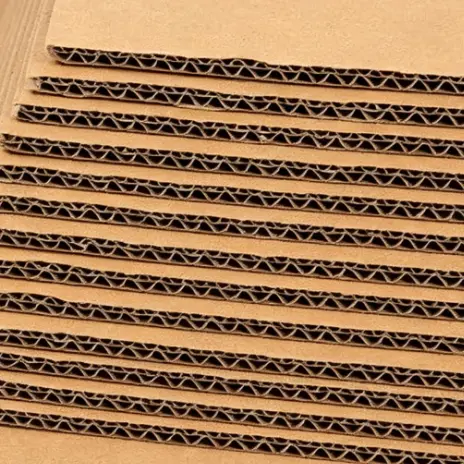
Table of Contents
- What Is High-Compression BE-Flute Double Wall?
- How Does the BE-Flute Structure Improve Packaging Performance?
- What Are the Main Advantages?
- How Does BE-Flute Compare with Other Double-Wall Boards?
- Where Is It Commonly Used?
- How Should Buyers Select the Right Board?
- What Quality Factors Should Be Evaluated?
- What Customization Options Are Available?
- FAQ
- Conclusion
What Is High-Compression BE-Flute Double Wall?
High-Compression BE-Flute Double Wall is a five-layer corrugated board construction that combines B-flute and E-flute corrugated mediums between paper liners. Instead of relying on one flute profile to perform every function, the BE structure assigns different roles to each layer.
The B-flute section has a relatively larger flute height and contributes to structural rigidity, impact absorption, and compression resistance. The E-flute section has a finer flute profile that creates a smoother outer surface with strong suitability for detailed printing. Together, these two flute structures create a board that can support demanding packaging requirements while maintaining a relatively refined appearance.
According to ZHONGYI's product information, the overall thickness of this BE double-wall construction is approximately 3.5–5.0 mm. This compact profile can be advantageous when packaging designers need structural performance without the bulk associated with thicker double-wall materials.
For additional technical information, buyers can review the High-Compression BE-Flute Double Wall product page.
How Does the BE-Flute Structure Improve Packaging Performance?
The performance of a corrugated board depends heavily on how its layers interact. In a BE configuration, the B-flute and E-flute are not simply duplicated layers; they complement one another.
- B-flute for structural support: The larger flute profile helps improve rigidity, impact absorption, and resistance to stacking loads.
- E-flute for surface quality: The finer flute profile contributes to a smoother surface that is well suited to high-definition graphics and detailed packaging designs.
- Five-layer construction: Multiple liners and corrugated mediums create a stronger structural system than typical single-wall board.
- Balanced packaging design: The combination allows packaging engineers to address protection and visual presentation within one material structure.
This layered engineering is particularly useful when packaging must withstand stacking, handling, vibration, and transportation while also presenting product information, branding, or warning graphics clearly.
What Are the Main Advantages?
Choosing the right corrugated structure is not only about maximum thickness. Packaging performance also depends on compression resistance, surface flatness, printing requirements, product weight, and logistics conditions.
| Performance Factor | BE-Flute Contribution | Packaging Benefit |
|---|---|---|
| Compression resistance | B-flute structural support | Better support for stacking and transportation |
| Surface smoothness | Fine E-flute profile | Improved appearance and print definition |
| Impact protection | Corrugated multi-layer construction | Helps absorb handling and transport shocks |
| Board profile | Approx. 3.5–5.0 mm total thickness | Combines protection with a comparatively compact structure |
| Customization | Adjustable grades and processing | Supports different products and logistics conditions |
Another important benefit is design flexibility. A packaging project may require a stronger structure for heavy products, a smoother surface for premium graphics, or moisture-resistant treatment for challenging logistics environments. BE double-wall construction provides a foundation that can be adapted to these requirements.
How Does BE-Flute Compare with Other Double-Wall Boards?
BE-flute and BC-flute double-wall boards serve different packaging priorities. BC-flute generally uses larger flute profiles and can provide substantial cushioning and load-bearing characteristics. BE-flute, by contrast, places greater emphasis on balancing structural strength with printability and a comparatively slimmer profile.
| Feature | BE-Flute Double Wall | BC-Flute Double Wall |
|---|---|---|
| Typical thickness | Approx. 3.5–5.0 mm | Approx. 6.0–7.0 mm |
| Surface characteristics | Fine and relatively smooth | More pronounced flute profile |
| Printing suitability | Excellent for detailed graphics | Suitable for functional packaging graphics |
| Typical focus | Strength plus presentation | Heavy-duty cushioning and protection |
The selection should therefore be based on the actual packaging environment rather than thickness alone. Product weight, stacking height, transport distance, moisture exposure, printing requirements, and box dimensions should all be considered during material selection.
Where Is It Commonly Used?
The combination of compression performance and printability makes BE double-wall corrugated board suitable for applications where packaging needs both protection and a professional visual appearance.
- Consumer goods packaging: Suitable for products requiring attractive graphics and dependable physical protection.
- Electronics packaging: Useful where products need structural support during handling and transportation.
- E-commerce shipping: Provides a balance between protective construction and manageable board thickness.
- Export packaging: Appropriate for products exposed to stacking, vibration, and extended transportation.
- Industrial packaging: Can be considered for products requiring stronger compression performance than conventional single-wall packaging.
For humid environments, cold-chain logistics, or maritime transportation, buyers may also consider water-resistant treatments, coatings, or laminations according to the actual packaging conditions.
How Should Buyers Select the Right Board?
A reliable procurement process should begin with the product rather than the board specification. Before requesting a quotation, packaging buyers should identify the following parameters:
- Product weight: Determine the static and dynamic loads the box must withstand.
- Stacking conditions: Consider the number of layers and expected storage duration.
- Transportation method: Sea, air, road, and courier transportation can create different vibration and handling conditions.
- Environmental exposure: Identify whether humidity, condensation, or water contact may affect board performance.
- Printing requirements: Determine whether the packaging requires basic markings or high-definition branding graphics.
- Box dimensions: Large boxes may require different compression and structural considerations than compact cartons.
Once these factors are established, the packaging supplier can recommend suitable paper grammage, board thickness, moisture resistance, printing method, and converting specifications.
What Quality Factors Should Be Evaluated?
Quality evaluation should cover both material properties and production consistency. Edge Crush Test (ECT) is an important indicator for evaluating the board's ability to resist edge compression. Surface flatness is also important because excessive flute lines or uneven surfaces can reduce printing quality and visual consistency.
Bonding strength between the liners and corrugated mediums is another critical factor. Weak bonding can reduce structural integrity, particularly when packaging is exposed to repeated handling or high compression. Moisture content should also be controlled because excessive moisture can influence board strength and dimensional stability.
A qualified packaging supplier should therefore maintain inspection procedures covering compression performance, cushioning behavior, flatness, printing accuracy, moisture content, and bonding strength. For large-volume procurement, consistent batch-to-batch performance is just as important as the initial sample.
What Customization Options Are Available?
Modern packaging projects often require more than standard sheets. Depending on the application, ZHONGYI can customize board dimensions, thickness, paper grammage, moisture content, and sizing levels. Additional processing can include high-precision color printing, logo printing, moisture-resistant lamination, slotting, die-cutting, custom shape cutting, and export warning labels.
Customization can help packaging buyers reduce unnecessary material use while maintaining required structural performance. It can also simplify the transition from prototype packaging to mass production by aligning board specifications with the final carton design from the beginning.
For procurement teams, it is useful to provide drawings, box dimensions, product weight, annual consumption, shipping conditions, printing requirements, and expected order volume when requesting a quotation. These details allow the manufacturer to evaluate the packaging structure more accurately.
FAQ
What is the difference between BE-flute and single-wall corrugated board?
BE-flute double-wall board contains two corrugated flute layers and multiple liners, while single-wall board contains one corrugated medium. The double-wall structure generally provides greater structural support and compression resistance, while the E-flute surface can improve printing quality.
Is BE-flute suitable for heavy products?
High-compression BE-flute can be considered for products requiring enhanced compression performance. However, the appropriate specification depends on product weight, box dimensions, stacking height, transportation conditions, and required safety margins.
Can BE-flute corrugated board be customized?
Yes. Depending on project requirements, customization may include dimensions, thickness, paper grammage, moisture resistance, printing, lamination, slotting, and die-cutting.
Is BE-flute suitable for high-quality printing?
Yes. The fine E-flute profile creates a relatively smooth surface, making BE construction suitable for packaging where detailed graphics, logos, product information, or premium visual presentation are important.
How can buyers choose between BE-flute and BC-flute?
BE-flute is generally considered when buyers need a balance of structural performance, compact thickness, and printability. BC-flute may be considered when cushioning and heavier-duty protection are the primary requirements. The final choice should be based on the actual product and logistics environment.
Conclusion
High-Compression BE-Flute Double Wall corrugated board offers a carefully balanced approach to modern packaging. By combining the structural contribution of B-flute with the smooth, print-friendly characteristics of E-flute, it can support packaging projects that require compression resistance, impact protection, attractive graphics, and efficient material utilization. For buyers comparing corrugated board solutions, evaluating product weight, stacking conditions, transport environment, moisture exposure, printing requirements, and customization needs will help create a more reliable specification. As an experienced Chinese packaging manufacturer and supplier, ZHONGYI provides customized corrugated board solutions for different industries and logistics scenarios. If you are planning a new packaging project or need a suitable high-compression board specification, contact us to discuss your requirements and request a tailored packaging solution.

