



Call Us
+86-18332577666
Email Us
xiaomengxuan123@126.com


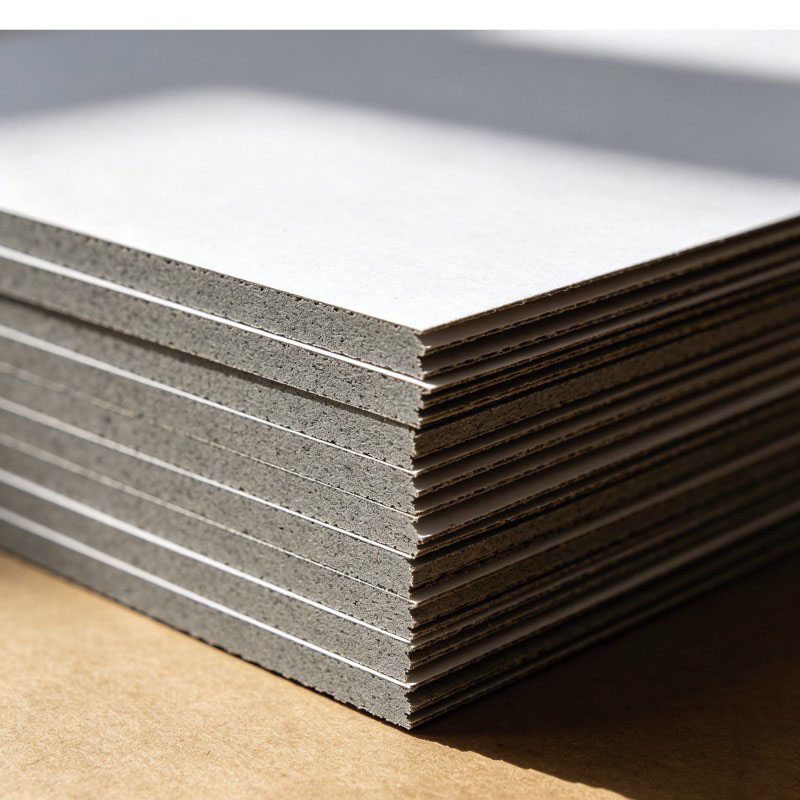



White Kraft Paper
As a professional manufacturer and supplier of white kraft paper, we offer factory-direct products made from bleached long-fiber softwood pulp. The paper features a pure, clean white finish on both sides, is uncoated, and offers excellent color reproduction---making it ideal for four-color printing and brand logo display. Food-grade specifications come with safety test reports, meeting requirements for direct food contact; we also support OEM services and mixed-batch orders across various specifications. Standard sizes ship within 24 hours, while production for custom specifications begins within 48 hours.
Send Inquiry
Product Description
White Kraft Paper is an eco-friendly, uncoated, and highly durable paper substrate. Distinct from standard natural kraft paper or coated white paperboard, it is crafted from bleached long-fiber softwood pulp. Its clean white base on both sides, excellent tear resistance, and good breathability make it a core material for premium creative packaging, food and bakery packaging, and industrial protective liners.
Core Substrate Attributes
1. Food & Bakery Packaging: Suitable for coffee bags, bread bags, and packaging for sandwiches, nuts, and tea. Food-grade, fluorescent-free versions allow direct food contact; the material is breathable, preventing moisture buildup and preserving food quality.
2. Brand & Creative Packaging: Used for apparel and beauty product wrapping, high-end gift packaging, eco-friendly tote bags, envelopes, hangtags, and greeting cards. The pure white base enhances color printing, delivering crisp, clean visuals that meet brand image upgrade needs.
3. Industrial Protective Liners: Serves as protective interleaving paper for electronics, hardware components, and glassware. It effectively prevents friction scratches and dust contamination while offering basic rust-prevention properties, making it ideal for warehousing and logistics protection.
4. Base Material for Further Processing: Can serve as base paper for PE coating to create waterproof and oil-resistant functional packaging, meeting custom requirements for moisture- and oil-proof packaging.
5. Eco-friendly Cross-border Alternative: A complete alternative to plastic packaging materials; it is eco-friendly, recyclable, and biodegradable. It meets environmental compliance standards for exports to Europe, the US, and Southeast Asia, ensuring smooth customs clearance.

Key Differentiating Performance Advantages
1. Stable Durability via Long-Fiber Strength: Made from bleached long-fiber softwood pulp, the paper offers high tensile strength and resistance to tearing and folding. It withstands high-speed bag manufacturing without snapping or cracking and offers superior load-bearing capacity compared to standard short-fiber papers.
2. High Color Fidelity on Pure White Base: Features a clean, uniform white base on both sides without coating interference. Whether using monochrome or four-color printing, there is no background color distortion, resulting in crisp, clean colors ideal for high-quality brand packaging. 3. Precise Whiteness Grading: Available in three grades---Natural White, High White, and Ultra-White. Natural White is fluorescent-free and safer for food contact; High White and Ultra-White meet the aesthetic demands of high-end cultural/creative products and fine printing, allowing for cost-effective selection based on specific needs.
4. Breathable & Moisture-Resistant for Fresh Food Packaging: Made from virgin paper fibers with natural porosity, it prevents moisture buildup, effectively protecting items like bread, fresh fruit, and tea leaves from dampness and mold---ideal for fresh food storage and packaging.
5. Compatible with Comprehensive Processing: Suitable for direct die-cutting, creasing, offset printing, and flexo printing; supports single- or double-sided PE lamination for enhanced water and oil resistance, making it adaptable to a wide range of packaging applications.
6. Eco-friendly & Compliant for Export: Pure paper composition without harmful additives; fully recyclable and compliant with global plastic-reduction policies, making it a preferred eco-friendly substrate for cross-border FBA exports and international brand packaging.
Graded Technical Specifications and Selection Parameters
1. Material Grade Classification: Pure wood pulp grade offers stable tensile strength and minimal impurities, suitable for high-end bag making and printing; food-grade (fluorescent-free) is safe for direct food contact and fully compliant; mixed-pulp economy grade offers high cost-performance, suitable for general outer packaging protection.
2. Full Range of Grammages: Standard weights cover the 40g--150g range; lighter weights suit package liners, while heavier weights are ideal for load-bearing tote bags and rigid packaging substrates.
3. Whiteness Grade Breakdown: Natural White offers a creamy, off-white tone with zero fluorescence; High White features a uniform, translucent base; Ultra-White offers high brightness and a premium visual texture, catering to diverse aesthetic and safety requirements.
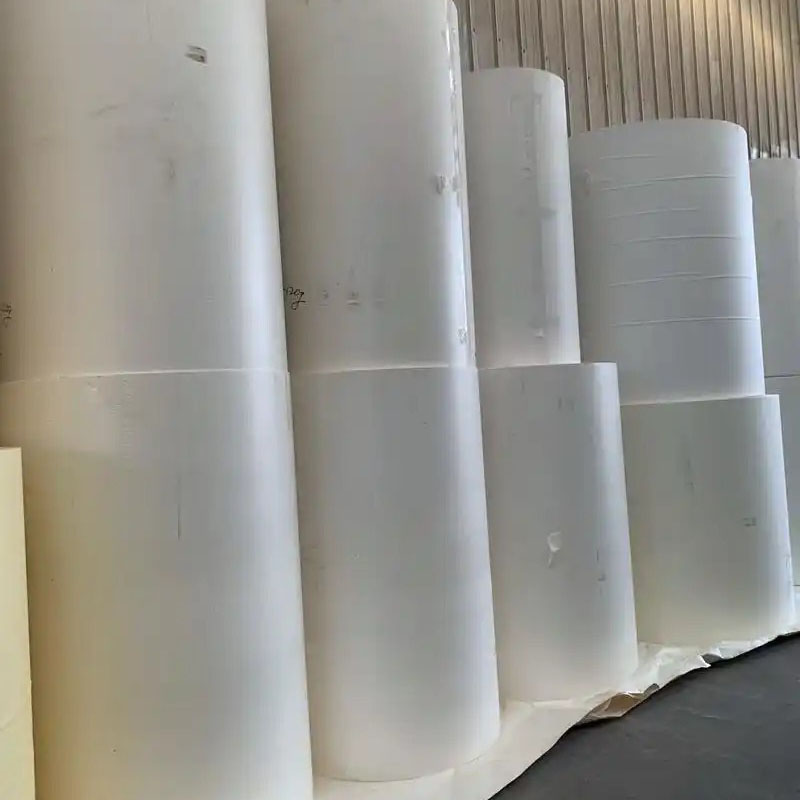
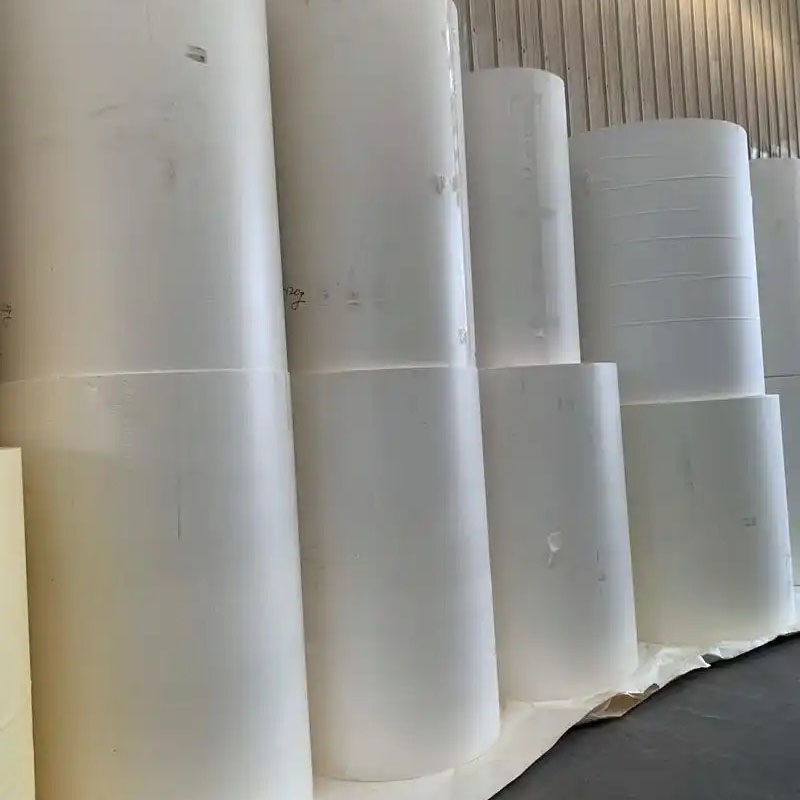
4. Supply Formats: Rolls can be slit to any width, fitting high-speed bag-making and lamination lines; sheets are available in standard sizes (including "Zhengdu" and "Dadu" formats) and custom cuts, suitable for manual packaging and offset printing.
5. Physical Performance Metrics: Excellent longitudinal breaking length and resistance to cracking during repeated folding; balanced moisture content minimizes warping or misalignment during machine processing; uniform thickness significantly reduces breakage rates in automated production lines. 6. Protective Processing: Virgin paper lacks inherent water and oil resistance; however, single- or double-sided PE coating can be customized upon request. Light sizing treatments for moisture resistance are also available, making it suitable for packaging in humid environments.
Cross-Industry Applications
1. Bakery & Foodservice: Chain bakeries use fluorescent-free white kraft paper for food takeout bags. Printing brand logos on the white background ensures a clean, safe appearance and breathability (preventing moisture buildup), significantly elevating the perceived quality of store packaging.
2. Beauty, Apparel & Creative Goods: Beauty and apparel companies utilize white kraft paper for both inner product wrapping and outer gift packaging. It offers crisp color printing and a minimalist, premium aesthetic that aligns with lightweight packaging strategies.
3. Electronics & Hardware: Electronics manufacturers use it for the protective wrapping of plastic casings and precision parts. It is lint-free and prevents friction scratches, ensuring clean protection during product transport.
4. Printing & Bag Manufacturing: Large-scale bag manufacturers purchase white kraft paper in rolls compatible with high-speed automated production lines. It ensures smooth paper feeding and low breakage rates, reliably supporting mass production.
5. Cross-Border Trade: Exporters use white kraft paper as a plastic alternative. These fully paper-based packaging solutions comply with export regulations, pass environmental inspections in various countries, and avoid customs clearance risks.
Authoritative Certifications & End-to-End Quality Control
1. Compliance Certifications: Products meet national standards for packaging paper. Food-grade variants hold safety certifications for food contact, and the entire product line offers SGS and RoHS test reports, facilitating customs clearance and project bidding.
2. Raw Material Inspection: Strict testing of wood pulp fiber ratios, tensile strength, impurity content, and whiteness standards prevents substandard paper from entering the warehouse.
3. Production Process Monitoring: Continuous monitoring of papermaking and calendering processes ensures uniform thickness and flatness, preventing issues such as warping or thickness irregularities.
4. Finished Product Testing: Random sampling tests tensile strength, bursting strength, folding endurance, and printability to guarantee stability during subsequent processing. 5. Final Appearance Inspection: 100% visual inspection after slitting; sheets with holes, dirt spots, or defects are rejected. The overall pass rate for finished products is ≥99.6%.
Key Differentiating Advantages vs. Market Peers
1. Superior Fiber Raw Materials: Unlike competitors who rely heavily on recycled short fibers, our pure wood pulp products utilize bleached long-fiber pulp. This results in higher tensile strength and fewer impurities, ensuring bags do not tear easily during manufacturing and are free from black spots or blemishes.
2. Consistent Paper Quality: Uniform thickness and high flatness ensure compatibility with high-speed automated bag-making and lamination equipment. This prevents issues like misalignment or frequent line breaks, thereby boosting production efficiency.
3. Precise Grade Selection: Clearly categorized into food-grade, general industrial-grade, and economy-grade options. We provide precise recommendations based on usage scenarios to avoid unnecessary over-specification and effectively control packaging costs for clients.
4. Comprehensive Product Range: White Kraft Paper can be purchased alongside natural kraft paper, kraft paper tape, corrugated liners, paper edge protectors, paper pallets, and strapping bands, enabling a complete, integrated supply of eco-friendly paper packaging solutions.
5. Flexible Delivery Timelines: Ample stock of standard-weight rolls and sheets is available for rapid 24-hour dispatch. Custom orders requiring specific slitting dimensions enter production within 48 hours, with priority given to urgent requests.
6. Clear Product Categorization: Distinct differentiation between four major paper types: natural kraft paper (ideal for low-cost, vintage-style monochrome printing), white kraft paper (suitable for colorful branding), white paperboard (for rigid color boxes), and white-top kraft liner (for heavy-duty corrugated board substrates), ensuring error-free selection.
Tailored Processing Support and Implementation Services
1. Scenario-Based Selection Guidance: Precise matching of basis weight, whiteness, and material grade based on specific client needs---such as bag load-bearing capacity, package protection, lamination/coating requirements, and food contact safety.
2. Processing & Printing Advice: Proactive guidance regarding the ink-absorption characteristics of uncoated paper; we advise clients to conduct press proofs for large-area solid-color printing to prevent issues like color deviation or ink bleeding. 3. Quality & After-Sales Guarantee: Free replacement or exchange is provided if batch issues---such as stains, holes, dimensional deviations, or manufacturing defects---are discovered upon receipt.
4. Long-term Reorder Service: We maintain records of customers' frequently used slit widths, sheet specifications, and whiteness grades; this eliminates the need for repeated verification during reorders and ensures efficient production coordination.
Standardized Shipping Protection & Logistics Efficiency
1. Finished Product Packaging Standards: Paper rolls feature reinforced cores and full moisture-proof film wrapping; sheet paper is stacked on wooden pallets with top and bottom edge protectors, sealed with moisture-proof stretch wrap, and clearly labeled with specifications.
2. Logistics Solutions for Various Scenarios: Rapid express delivery for samples; dedicated freight lines and full-truckload delivery for bulk orders; neutral export packaging available for foreign trade orders to meet cross-border shipping standards.
3. Tiered Shipping Timelines: Standard stock items ship within 24 hours; custom slit sizes and bespoke specifications enter production within 48 hours.
Factory Capabilities & Market Reputation
1. Cross-Border Export Capabilities: Our White Kraft Paper is widely used for paper bags and packaging products exported to Europe, the Americas, and Southeast Asia; it complies with overseas environmental regulations and supports stable long-term supply for cross-border supply chains.
2. Diverse Client Base: We serve factories across various sectors---including baked goods, creative gifts, printing and bag manufacturing, and electronics---with many clients opting for comprehensive paper consumable procurement.
3. Stable Supply & Production Capacity: Backed by high-quality upstream paper sources, we maintain consistent stock across all basis weights and grades, ensuring stable fulfillment of both small and large orders without the risk of stockouts.
4. Authentic Customer Feedback:
① Uniform tensile strength; brand logos printed on the white surface appear clean and sharp; finished coffee takeout bags offer excellent texture and quality. ② Food-grade, fluorescent-free paper ensures safety and compliance; ideal for bread and bakery packaging; highly compatible with lamination processing. ③ One-stop procurement for a full range of paper packaging consumables; compliant with export environmental standards; significantly simplifies the purchasing and coordination process.
FAQ
Q1: How does the uncoated structure of White Kraft Paper affect printing and processing?
It is an uncoated paper made from virgin pulp; compared to coated paperboard, it offers higher ink absorption and more uniform penetration, resulting in a natural, vintage texture for monochrome printing and soft, gentle tones for four-color printing. For large-area solid-color printing, we recommend conducting a press proof beforehand to fine-tune ink usage and avoid issues like ink bleeding or color inconsistency.
Q2: How do application scenarios differ based on the fiber composition of white kraft paper?
Pure wood pulp varieties feature long fibers and high tensile strength, making them suitable for load-bearing shopping bags and intensive processing; food-grade, fluorescent-free varieties prioritize safety and are intended for direct food contact packaging; economical mixed-pulp varieties offer high cost-efficiency but are best suited for standard outer wrapping or simple packaging, rather than load-bearing bag manufacturing.
Q3: How should white kraft paper specifications be matched to automated bag-making lines?
For high-speed, continuous bag-making and extrusion coating lines, custom-slit paper rolls are preferred to ensure smoother paper feeding and eliminate waste caused by splices. For low-speed manual production, intermittent processing, or offset printing, standard flat sheets are sufficient, offering lower costs and greater versatility.
Q4: What performance issues arise when white kraft paper absorbs moisture?
Excessive moisture content directly reduces tensile strength and toughness, making the paper prone to tearing or cracking during bag manufacturing; it can also cause surface warping and printing misalignment. Therefore, storage areas must be kept dry and well-ventilated, and stacking in damp conditions is strictly prohibited.
Q5: What are the selection criteria for the paper substrate when undergoing extrusion coating?
Standard water- and oil-resistant packaging can utilize general-purpose 60--80g paper; for load-bearing, functional extrusion-coated packaging, we recommend using pure wood pulp paper with a basis weight of 100g or higher, as the substrate offers superior toughness and better adhesion during the coating process, preventing delamination or peeling later on.
Transparent After-Sales Service
1. Sample and Certification Support: We provide free physical samples in both roll and flat-sheet formats, allowing for on-site testing of tensile strength, print quality, and machine compatibility. Food safety and environmental compliance reports are also available to facilitate foreign trade customs clearance and project bidding. 2. Official Warranty Coverage: A 6-month warranty applies under standard storage conditions (dry and well-ventilated). Free replacements are provided for quality issues caused by raw materials or manufacturing processes, such as holes, uneven thickness, or batch-related spotting; damage due to moisture exposure caused by mishandling or errors during the customer's subsequent processing is not covered.
3. Customer-Friendly Return/Exchange Policy: Exchanges for samples can be negotiated if the customer is dissatisfied; replacements or returns are supported for quality defects arising from mass production. Assistance with specification exchanges is available for intact, unprocessed, and uncut stock items; however, custom-cut products cannot be returned or exchanged unless there is a quality issue. Unopened, full-pallet stock items are eligible for "no-reason" returns or exchanges within 7 days.
Customization Workflow and Production Process
1. Customization Workflow: Discuss specifications (basis weight, dimensions, whiteness grade, material type) → Confirm intended use (food-grade vs. industrial-grade) → Match solution → Send samples → Confirm order and schedule production → Slitting/sheeting → Visual quality inspection → Moisture-proof packaging → Logistics and shipping → After-sales follow-up.
2. Standardized Production Process: Blend bleached wood pulp fibers → Form paper on a Fourdrinier machine → Multi-roll calendering/smoothing → Constant-temperature drying and conditioning → Rewind into master rolls → Precision slitting/sheeting → Spot checks for appearance and performance → Moisture-proof protective packaging and warehousing.
Hot Tags: White Kraft Paper, Manufacturer, Supplier, Wholesale
Related Categories
Send Inquiry
Please feel free to fill your inquiry in the form below. We will reply you in 24 hours.
Related Products

-
E-mail
X
We use cookies to offer you a better browsing experience, analyze site traffic and personalize content. By using this site, you agree to our use of cookies.
Privacy Policy
News
 Recycling: The Green Loop of Corrugated Board2026/07/22
The environmental value of corrugated board lies not only in its renewable raw materials but also in its highly efficient global recycling system.
 Board Grades: From Single-Wall to Triple-Wall2026/07/22
Corrugated board is not a one-size-fits-all material.